
How Smart Refrigerator Technology Is Changing the Modern Kitchen
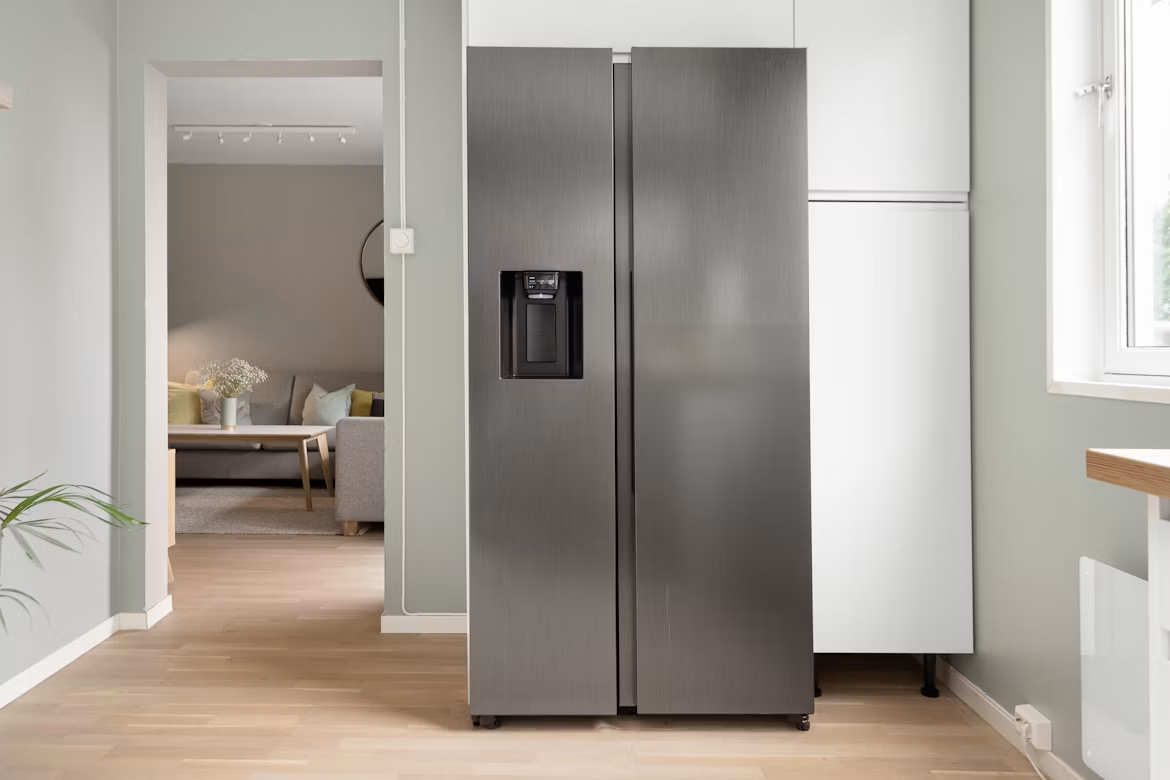
The refrigerator has traditionally been one of the simplest appliances in a home: keep food cold, store drinks, and maintain a stable temperature. Today, however, refrigeration technology is becoming considerably more sophisticated. Connected appliances can communicate with smartphones, monitor internal conditions, support energy-management features, and even help households keep track of what is stored inside.
This shift reflects a broader trend toward smart home technology, where everyday appliances are increasingly connected to digital ecosystems. Among the products driving this change, Samsung Fridges are a notable example of how refrigeration can combine traditional cooling technology with software, sensors, connectivity, and automation.
The Evolution of Refrigeration Technology
Modern refrigerators are no longer designed solely around mechanical cooling. Manufacturers increasingly incorporate digital controls, sensors, variable-speed compressors, wireless connectivity, and intelligent monitoring systems.
One important development is the use of electronic temperature management. Instead of relying entirely on basic mechanical controls, smart refrigerators can use sensors to monitor temperature conditions and adjust cooling performance automatically. This can help maintain more consistent temperatures while potentially reducing unnecessary energy consumption.
Connectivity is another major development. A connected refrigerator can communicate with a home network, allowing users to interact with certain functions through a smartphone or compatible smart-home platform. This transforms the refrigerator from an isolated appliance into another device within a connected digital environment.
How Sensors Improve Refrigerator Performance
Sensors are among the most important technologies inside a modern smart refrigerator. Different sensors can monitor conditions such as temperature, humidity, and door activity.
Temperature sensors provide the system with information about conditions inside different compartments. If the internal temperature changes because the door has been opened frequently, the refrigerator can respond by adjusting its cooling operation.
Door sensors can also provide useful information. Some connected refrigerators can alert users when a door has remained open for too long. While this may seem like a small convenience, an open refrigerator door can allow cold air to escape and force the cooling system to work harder.
Humidity management can also be important for food storage. Certain compartments are designed to maintain conditions that are more suitable for fresh produce. Digital monitoring can help these systems operate more accurately than traditional approaches.
Smart Connectivity and Mobile Control
One of the clearest differences between conventional and connected refrigerators is the ability to interact with an appliance remotely.
Smart refrigerator platforms can allow users to check appliance information from a smartphone. Depending on the model and software ecosystem, users may be able to receive notifications, monitor temperatures, or adjust selected settings without physically standing in front of the appliance.
This type of connectivity is part of the wider Internet of Things (IoT). IoT technology allows physical devices to exchange information through networks and software services. A refrigerator can therefore become part of a broader smart-home setup alongside lighting systems, security devices, thermostats, and other connected appliances.
Remote notifications can be particularly useful. For example, if a user accidentally leaves a refrigerator door open, a connected system may be able to send an alert to a mobile device. These small interactions demonstrate how software can add practical value to traditional household equipment.
Digital Displays and User Interfaces
Another technological development is the use of digital displays as appliance interfaces. Instead of relying only on physical knobs and buttons, some modern refrigerators use touchscreen-style controls or integrated displays.
A digital interface can provide access to temperature settings, appliance information, and other features in one place. More advanced systems may also integrate calendars, reminders, recipes, shopping-related functions, or smart-home controls.
This represents an important change in appliance design. The refrigerator is becoming not only a storage device but also a digital interface located in one of the most frequently used areas of the home.
However, the usefulness of these interfaces depends heavily on software design. A feature-rich display is only beneficial if it remains intuitive and responsive. Manufacturers therefore need to balance functionality with simplicity.
Energy Efficiency Through Smarter Controls
Energy efficiency is another area where technology is influencing refrigerator design. Refrigerators operate continuously, so improvements in cooling efficiency can have a meaningful effect on household electricity consumption over time.
Modern cooling systems can use variable-speed compressor technology, electronic controls, and sensors to adjust performance according to current conditions. Rather than operating at a fixed level under every circumstance, the system can respond to changes in temperature and usage.
For example, after a refrigerator door has been opened repeatedly, the cooling system may need to work differently than it would during a period of minimal use. Intelligent controls can help coordinate these changes.
Energy monitoring is also becoming increasingly relevant as smart homes expand. Consumers are becoming more interested in understanding how household devices contribute to overall electricity consumption. Connected appliances can potentially provide more information that helps users make informed decisions about their energy usage.
Food Management and Inventory Technology
One of the more interesting possibilities for smart refrigeration is digital food management. Cameras and recognition technologies can help users understand what is inside their refrigerator without manually checking every shelf.
Some advanced refrigerator systems can use internal cameras to provide a visual view of stored items. This can be useful when shopping because a user may be able to check refrigerator contents remotely before purchasing additional groceries.
Food inventory technology also illustrates how artificial intelligence and computer vision are gradually entering everyday appliances. A system capable of identifying products can potentially assist with reminders, shopping lists, or food-management tasks.
The technology is still evolving, and recognition accuracy can vary depending on packaging, lighting, and the position of items. Nevertheless, the concept demonstrates how AI can turn an ordinary appliance into a more interactive household tool.
Integration With the Smart Home
Smart refrigerators become more useful when they can operate alongside other connected devices. A modern smart home may include smart speakers, thermostats, lighting, security cameras, washing machines, ovens, and other appliances.
Integration allows users to manage multiple devices through a common ecosystem. Voice assistants, mobile applications, and automated routines can reduce the need to interact with each appliance independently.
For example, a connected refrigerator could work alongside other kitchen appliances through a compatible smart-home platform. Notifications can appear on a phone, while voice-controlled systems can provide information without requiring the user to touch the refrigerator.
This interconnected approach is gradually changing how people think about household technology. Instead of viewing appliances as separate products, consumers increasingly see them as components of a larger digital environment.
Software Updates and Long-Term Functionality
Connected appliances also introduce an important concept that traditional refrigerators did not have to the same extent: software maintenance.
A conventional refrigerator can operate for years without receiving a software update. A connected model, however, may depend on firmware, mobile applications, network services, and cloud-based features.
Software updates can potentially improve performance, introduce new functions, address security vulnerabilities, or fix technical problems. This makes cybersecurity an increasingly relevant consideration for smart appliances.
As more household devices connect to the internet, manufacturers must protect user data and ensure that communication between appliances, applications, and cloud services is secure. Consumers should also use strong account credentials, keep supported software updated, and understand what information their connected appliances collect.
Why Smart Refrigerators Matter to the Future of Home Technology
The development of smart refrigeration reflects a much larger transformation in consumer technology. Computing power, wireless connectivity, sensors, and artificial intelligence are being integrated into products that previously operated with relatively simple mechanical systems.
The refrigerator is particularly interesting because it is always present in the home and performs an essential task continuously. Adding digital intelligence to such an appliance can create opportunities for better monitoring, automation, energy management, and convenience.
At the same time, smart features should complement rather than complicate the core purpose of the appliance. Cooling performance, reliability, storage capacity, and energy efficiency remain fundamental considerations.
Ultimately, the future of refrigeration is likely to involve a combination of dependable hardware and increasingly sophisticated software. As smart-home ecosystems mature, refrigerators may become more deeply integrated with household routines, helping users monitor food, manage energy, receive alerts, and coordinate connected devices.
The evolution of Samsung Fridges and similar connected appliances demonstrates that household technology is no longer limited to computers and smartphones. Everyday products are becoming intelligent, networked devices, bringing the principles of modern software and IoT technology into the kitchen.
Similar Posts
7 Powerful Ways an AI Study Assistant Helps Students Learn Faster
Ask AI vs ChatGPT vs Gemini: Which One Gives Smarter Answers in 2025?
Why is My Laptop Slow? Common Causes and Fixes