
Kie.ai Review 2026: Features, Use Cases, Pros, Cons, and Developer Experience
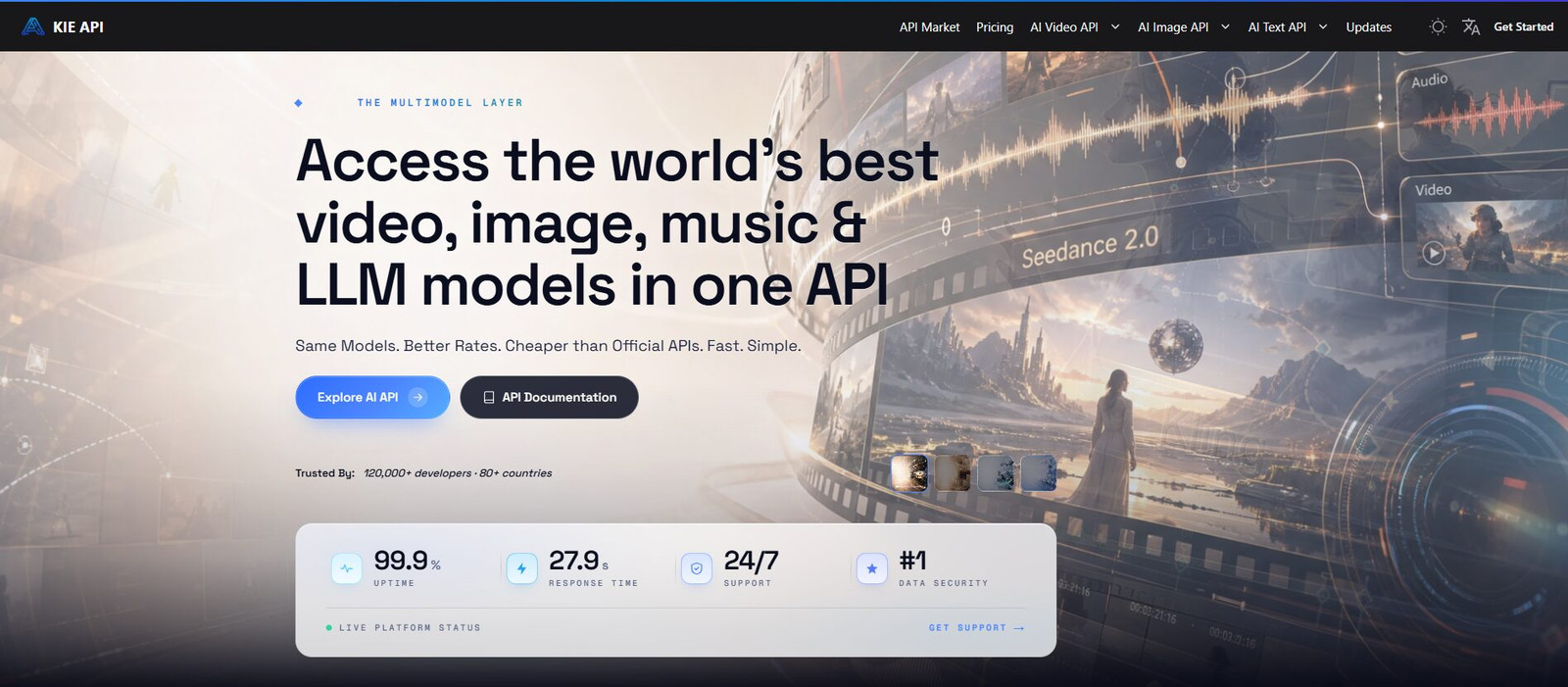
The AI industry is evolving at an incredible pace. Every month, new models, APIs, and platforms emerge, promising better performance, lower costs, and more capabilities. While this rapid innovation is exciting, it creates a major challenge for developers: managing multiple AI providers, API keys, billing systems, and integrations.
Kie.ai positions itself as an API-first AI aggregation platform that simplifies access to leading AI models through a single API. Instead of juggling accounts from multiple AI companies, developers can connect once and access a broad ecosystem of multimodal AI capabilities.
What Is Kie.ai?
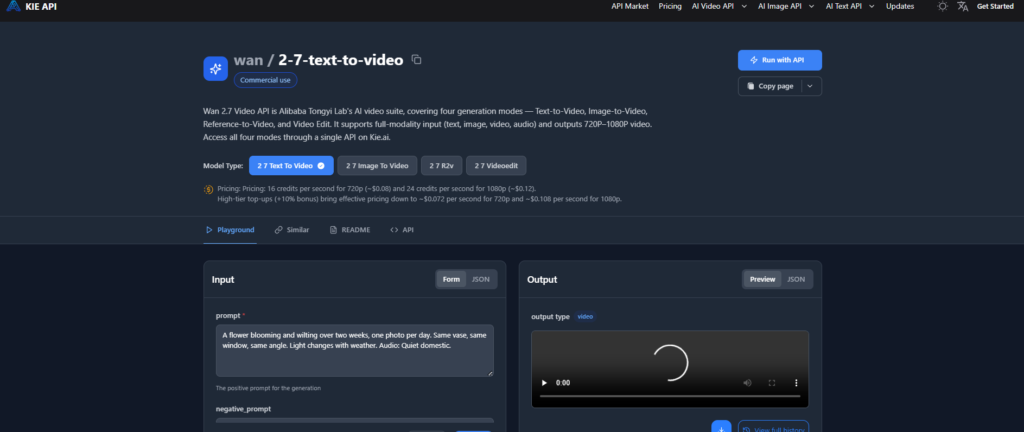
Kie.ai is an AI infrastructure platform designed to provide unified access to multiple artificial intelligence models through a single API endpoint and API key.
Rather than requiring separate integrations for different providers, Kie.ai acts as a middleware layer that aggregates various AI services into one developer-friendly environment.
This approach reduces development complexity while allowing teams to experiment with and deploy multiple AI models without extensive backend modifications.
Kie.ai Features
| Feature | Details |
|---|---|
| Platform Type | AI Aggregation Platform |
| Primary Audience | Developers, Startups, AI Builders |
| API Access | Unified API |
| Model Support | Multiple AI Providers |
| Integration Complexity | Low |
| Developer Focus | High |
| Multimodal Support | Yes |
| API Key Management | Single Key |
Why Kie.ai Is Gaining Attention
The biggest challenge facing AI developers today isn’t model quality; it’s integration complexity.
A modern AI application might require:
- Text generation
- Image generation
- Audio processing
- Speech recognition
- Video understanding
- Embeddings
- Translation
Traditionally, developers would need separate accounts, authentication systems, billing structures, and SDKs for each service.
Kie.ai aims to solve this problem through centralization.
Key Features of Kie.ai
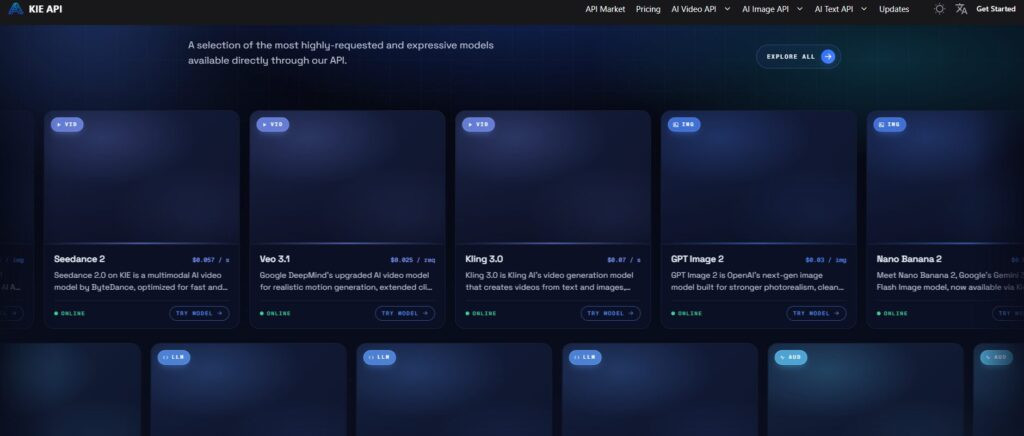
Unified API Access
One of Kie.ai’s most valuable features is its unified API architecture.
Developers can interact with multiple AI services through a standardized interface instead of learning different API formats.
Benefits include:
- Faster implementation
- Reduced maintenance
- Easier model switching
- Lower onboarding complexity
Multimodal AI Support
Modern applications increasingly require more than text generation.
Kie.ai supports access to multiple AI modalities including:
| Capability | Potential Applications |
| Text Generation | Chatbots, Content Creation |
| Image Generation | Marketing, Design |
| Speech Processing | Voice Assistants |
| Audio Analysis | Media Applications |
| Vision Models | Image Understanding |
| Embeddings | Search and Retrieval |
Faster Experimentation
Developers frequently test multiple models before selecting one for production.
Kie.ai enables:
- Rapid comparison testing
- Model benchmarking
- Cost-performance evaluation
- Quick deployment decisions
Centralized Billing
Managing invoices across several AI vendors can become difficult.
A major attraction of Kie.ai is centralized billing, allowing businesses to:
- Track AI expenses more effectively
- Simplify accounting
- Reduce administrative overhead
- Improve cost visibility
Developer-Friendly Infrastructure
Kie.ai focuses heavily on developer experience.
Notable benefits include:
- Simplified authentication
- Consistent API structure
- Documentation-focused onboarding
- Faster prototyping
Real-World Uses of Kie.ai
AI SaaS Applications
Startups building AI-powered software can leverage Kie.ai to access multiple models without creating separate integrations.
Examples include:
- AI writing tools
- Customer support systems
- Productivity platforms
- Research assistants
Content Creation Platforms
Content creators increasingly rely on AI for:
- Blog writing
- Social media content
- Marketing campaigns
- Video scripting
Kie.ai allows developers to integrate these capabilities more efficiently.
Enterprise Automation
Businesses can use Kie. ai-powered applications for:
- Document analysis
- Workflow automation
- Customer service
- Data extraction
AI Research and Testing
Researchers benefit from:
- Model comparison
- Performance evaluation
- Cost benchmarking
- Rapid experimentation
Kie.ai Features Comparison
| Category | Kie.ai |
| Single API Access | Yes |
| Multiple AI Models | Yes |
| Central Billing | Yes |
| Multimodal Support | Yes |
| Developer-Oriented | Yes |
| Easy Model Switching | Yes |
| Rapid Prototyping | Yes |
Kie.ai Reviews and Community Feedback
Since AI aggregation platforms are becoming increasingly popular, community discussions often focus on convenience and efficiency.
Positive feedback commonly highlights:
Reduced Development Time
Developers appreciate avoiding repetitive integrations.
Easier Model Management
Managing one API instead of several simplifies workflows considerably.
Better Experimentation
Teams can compare models without rewriting large portions of code.
Startup-Friendly Infrastructure
Many founders value faster MVP development and deployment.
Common Criticisms and Challenges
Like any platform, Kie.ai is not without limitations.
Dependency on a Middle Layer
Because Kie.ai sits between users and model providers, some developers worry about:
- Additional latency
- Third-party dependency
- Potential service interruptions
Limited Provider-Specific Features
Direct provider APIs occasionally offer advanced features that may not immediately be available through an aggregation layer.
Learning Curve
Although Kie.ai simplifies integrations overall, developers still need time to understand:
- API structures
- Rate limits
- Pricing models
- Usage optimization
Vendor Risk
Businesses relying heavily on a single aggregation platform should evaluate:
- Reliability
- Uptime
- Long-term support
- Pricing stability
Pros and Cons of Kie.ai
| Pros | Cons |
| Single API for multiple models | Additional dependency layer |
| Faster development | Potential latency considerations |
| Easier billing management | May not expose all provider features |
| Simplified integrations | Platform availability becomes important |
| Excellent for prototyping | Some advanced users may prefer direct APIs |
| Supports multimodal AI | Learning curve for new users |
Who Should Use Kie.ai?
Kie.ai is particularly suitable for:
Startups
Startups can launch products faster without spending months managing AI infrastructure.
Indie Developers
Independent developers gain access to advanced AI ecosystems through a simplified workflow.
AI Agencies
Agencies handling multiple client projects can streamline integrations and deployment.
Product Teams
Teams building AI-powered products can test and switch models efficiently.
Who Might Prefer Direct APIs?
Direct model provider APIs may still be preferable for:
- Large-scale enterprise deployments
- Highly customized AI systems
- Advanced infrastructure teams
- Organizations requiring maximum control
Is Kie.ai Worth It?
For most developers, the answer is likely yes.
The platform addresses one of the biggest challenges in modern AI development: fragmentation.
Instead of maintaining relationships with numerous AI vendors, developers gain access to a centralized ecosystem that simplifies experimentation, deployment, and scaling.
While power users may occasionally require direct provider access for specialized functionality, Kie.ai offers a compelling solution for the majority of startups, creators, and software teams.
FAQs
What is Kie.ai?
Kie.ai is an API-first AI aggregation platform that provides access to multiple AI models through a single API and API key.
Who should use Kie.ai?
Developers, startups, AI agencies, product teams, and creators looking to simplify AI integrations can benefit from Kie.ai.
Does Kie.ai support multimodal AI?
Yes. Kie.ai supports various AI capabilities including text, image, audio, and vision-related applications.
What is the biggest advantage of Kie.ai?
Its unified API approach reduces integration complexity and allows developers to access multiple AI services through one platform.
Are there any drawbacks?
Potential drawbacks include dependency on an intermediary platform, possible latency concerns, and limited access to some provider-specific features.
Is Kie.ai good for startups?
Yes. Many startups use AI aggregation platforms because they reduce development time and simplify infrastructure management.
Similar Posts
How Technology Is Transforming Modern Grooming Through Hair Growth Solutions For Men?
AI-Powered Satellites and Smart Networks: The Future of Global Connectivity
Samsung’s Tiny AI Model Challenges DeepSeek and Gemini on Reasoning | Is It True?