
What Is Geospy? How This AI Identifies Locations From Photos | A Complete Guide
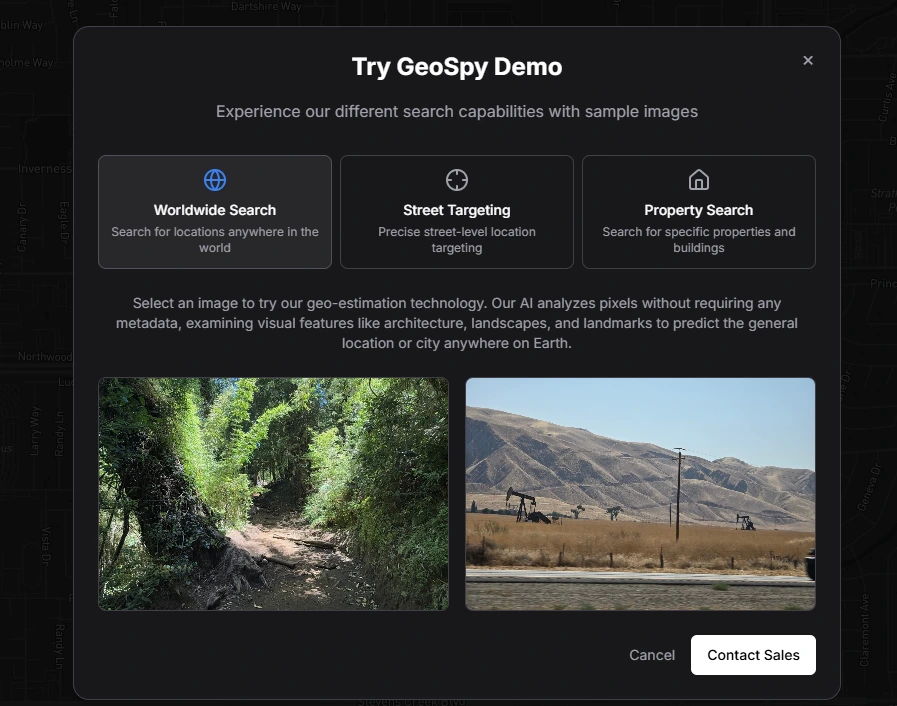
Geospy is an AI-powered image analysis tool designed to estimate the geographic location of a photo even when no GPS data is available.
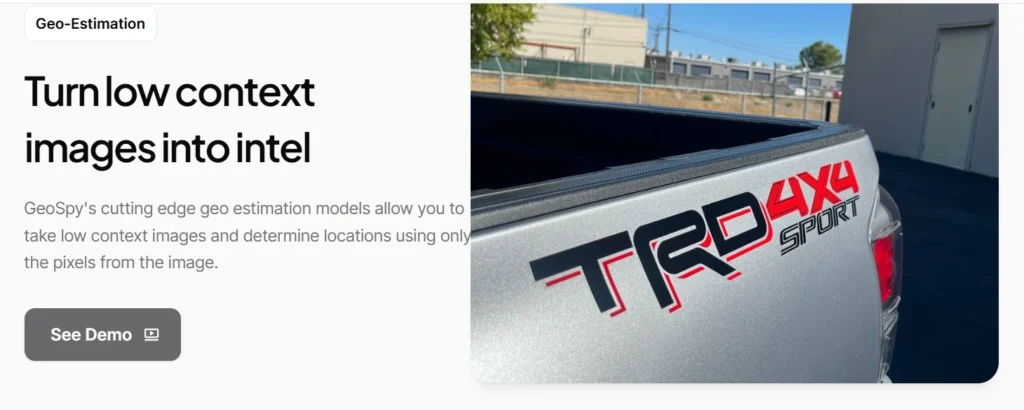
Instead of relying on metadata, Geospy analyzes visual clues inside an image, such as architecture, terrain, vegetation, road patterns, and environmental context, to infer where a photo was likely taken.
That single capability is why this AI tool has suddenly drawn attention across journalism, open-source intelligence, and online privacy discussions.
How Geospy Works (In Simple Terms)
Geospy.ai does not “track” people or devices. It works by pattern recognition, not surveillance.
Here’s the process in plain language:
- Image input
You upload a photo with no location data. - Visual feature extraction
The AI examines buildings, signs, landscapes, shadows, road styles, climate indicators, and natural features. - Pattern matching
These visual signals are compared against large datasets of known geographic features. - Probability-based location estimate
The system outputs a likely region, not an exact address, based on statistical similarity.
Geospy’s strength lies in contextual inference, not precision tracking.
Why Geospy Is Getting Attention Right Now
The interest around this AI isn’t accidental. It sits at the intersection of three fast-growing areas:
- AI image analysis
- Geolocation intelligence
- Privacy and ethical debate
People are realizing that photos reveal more than expected, even without GPS tags. Tools like Geospy demonstrate how AI can infer location using purely visual information.
This capability has practical uses, but it also raises valid concerns.
How Accurate Is Geospy?
This AI tool is not perfectly accurate, and it does not claim to be.
What it does well:
- Narrow down regions or countries
- Identify broad geographic patterns
- Work without metadata or EXIF data
Where it struggles:
- Similar-looking cities or environments
- Indoor images
- Heavily edited or low-quality photos
- Generic urban settings
It provides estimates, not guarantees. Accuracy depends heavily on image quality and environmental uniqueness.
What Geospy Is Not (Important Clarification)
To avoid confusion, it’s important to be clear.
Geospy is not:
- A GPS tracking system
- A surveillance tool monitoring people in real time
- A facial recognition system
- A law enforcement database
It does not pull personal data from devices. It only analyzes what is visible inside the image itself.
Who Uses AI Tools Like Geospy?
Tools in this category are typically used by:
- Journalists verifying image origins
- OSINT researchers analyzing public content
- Academics studying AI perception
- Security analysts examining visual data
- Educators demonstrating AI inference
Geospy-style tools are analytical, not consumer tracking products.
Privacy Concerns and Ethical Questions
This is where Geospy becomes part of a larger conversation.
If AI can estimate where a photo was taken without metadata, it raises questions such as:
- How much information do images reveal unintentionally?
- Should people be more cautious about sharing photos online?
- Where should ethical limits be drawn?
This AI does not create these issues, but it makes them visible.
In 2026, image-based AI tools are forcing a rethink of digital privacy norms, especially on public platforms.
Can Geospy Be Misused?
Like most AI tools, misuse depends on human intent, not the technology itself.
Potential risks include:
- Misinterpretation of AI estimates as facts
- Overreliance without human verification
- Using outputs outside ethical or legal boundaries
Responsible use requires context, transparency, and limits.
How Geospy Fits Into the Bigger AI Trend
It represents a broader shift in AI development:
- Less focus on raw data collection
- More focus on inference and reasoning
- Increased use of visual intelligence
- Growing emphasis on AI explainability
AI systems in 2026 are no longer just reading data; they are interpreting the world visually.
Should You Be Worried About Tools Like Geospy?
Concern should be informed, not reactive.
You don’t need to panic, but you should understand:
- Images can reveal context
- AI can infer patterns humans miss
- Public content carries unintended signals
Awareness, not fear, is the correct response.
Also Read: Can You Create a Full NFT Collection Using AI Tools? Complete Guide & Expert Insights
Final Takeaway
Geospy is not a threat, a spy tool, or a magic locator.
It is a clear example of how modern AI interprets visual information, and why images now carry more meaning than most people realize.
Understanding tools like Geospy helps you stay informed, cautious, and prepared in a world where AI doesn’t just read data, it reads the environment.
FAQs
Is Geospy tracking people through photos?
No. it analyzes visual content only. It does not track individuals, devices, or identities.
Can Geospy find the exact location of a photo?
No. It provides estimated regions, not precise coordinates.
Does Geospy use GPS or EXIF data?
No. It works even when metadata is removed.
Is Geospy legal to use?
Yes, using AI image analysis tools is generally legal, but how the results are used matters. Always follow local laws and ethical guidelines.
Can people prevent AI from inferring photo locations?
There is no guaranteed way, but minimizing identifiable landmarks and context can reduce inference accuracy.
Similar Posts
Why Staying Updated With the Latest Technology Trends Matters Today
How Cloud Infrastructure Works: Beginner to Advanced Explained
Fast Power Made Simple: Why Anker Leads the USB-C and USB Charger Market