
Power Without Limits: Understanding the Technology Behind Modern Anker Chargers

Charging technology has advanced rapidly as smartphones, tablets, wireless earbuds, and portable computers have become central to daily life. Reliable power delivery is now essential, whether at home, in the office, or on the go. Modern solutions such as wireless and USB-C chargers offer efficient ways to keep devices powered while supporting safety, speed, and user convenience.
Anker’s charger lineup reflects the industry’s shift toward more innovative, safer, and faster charging standards. This article explains the technology behind today’s chargers and how these innovations shape everyday mobile use.
The Rise of Wireless Charging
The electromagnetic field generated by charging pads typically measures around 144 A/m at 10 mm from the surface, which efficiently transfers energy to compatible devices while remaining safe for everyday use. A wireless charger transfers energy using an electromagnetic field generated by the charging pad. When a compatible phone is placed on the pad, its internal coil receives the magnetic energy and converts it into electrical power.
How Wireless Charging Works
- The charging pad generates an electromagnetic field.
- The device’s internal coil receives the field.
- Power is converted into usable electrical energy.
- The charger and device coordinate voltage and temperature levels.
- The system adjusts output to protect the device’s battery.
The entire process happens continuously and automatically, allowing the phone and charger to communicate in real time. Wireless charging is handy in workspaces, nightstands, and environments where users want quick access to their devices without plugging and unplugging cables.
Why USB-C Charging Remains Essential
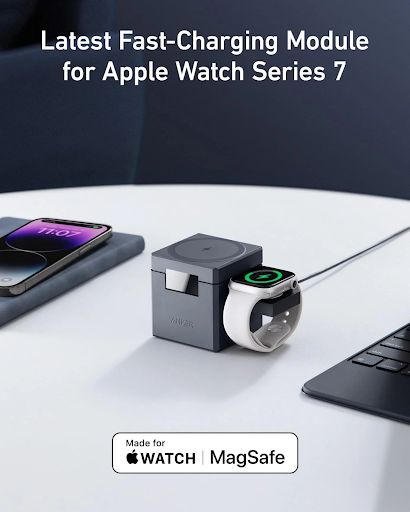
Even with the rise of wireless charging, the USB-C charger remains the fastest and most efficient charging option. USB-C uses the USB Power Delivery (USB-PD) protocol to deliver higher power levels safely to a wide range of devices. The connector’s reversible design, universal compatibility, and ability to power everything from phones to laptops make it a practical standard.
USB-C chargers offer more efficient heat control, faster energy transfer, and stable voltage regulation. Because the device communicates directly with the charger to determine how much power it can safely accept, charging remains both fast and secure.
GaN Technology: Making Chargers Smaller and More Efficient
Gallium Nitride (GaN) is one of the most critical advancements in charger design. GaN replaces traditional silicon components, enabling chargers to operate at higher efficiencies while producing less heat. This allows manufacturers to create smaller, lighter chargers without sacrificing power output.
GaN-based chargers are handy for users who carry multiple devices, travel frequently, or need compact power solutions that still support fast charging.
Wireless vs. USB-C Charging: Practical Differences
Wireless and usb-c charger serve different purposes, and most users benefit from having both. Wireless charging is ideal for convenience, perfect for desks, bedside tables, and casual, frequent use. USB-C charging, however, remains the preferred choice when speed and energy efficiency are necessary, especially for laptops, tablets, or situations where time is limited.
Comparison Table
| Feature | Wireless Charger | USB-C Charger |
| Speed | Moderate | Very fast |
| Convenience | Excellent | Requires cable |
| Heat Efficiency | Moderate | High |
| Best Use | Desk or bedside | Travel, fast charging |
| Compatibility | Qi-enabled devices | Broad device support |
Internal Safety Systems and Battery Protection
Safety is a primary focus of modern charger engineering. Chargers today include multiple layers of protection that continuously monitor voltage levels, power output, and temperature. These internal systems identify irregularities and automatically adjust power flow, helping prevent overheating, overcharging, and electrical faults.
A well-designed charger can significantly extend a device’s battery lifespan by ensuring stable power delivery across thousands of charging cycles. This stability is significant for high-capacity devices that rely on strong energy management.
The Importance of Engineering Quality
High-quality chargers directly contribute to device protection and the overall user experience. Manufacturers use heat-resistant materials, durable casings, and precision-designed components to maintain consistent performance under daily use. Internal circuitry, connector durability, and thermal dissipation all influence how long a charger lasts and how safely it powers devices.
By combining robust materials with advanced power management software, modern chargers deliver reliable performance in day-to-day scenarios from powering laptops on the go to keeping smartphones charged during long work sessions.
Conclusion
For consumers, understanding how these systems work helps ensure safe and efficient use across all devices. Whether at home or on the go, modern chargers are designed to support a connected lifestyle by delivering power without limits.
Similar Posts
AI in Exam Proctoring in Australia (2025): Fair or Biased? Evidence & Solutions
Building a Scalable Tech Stack for Growing Startups
Journey of Virtual Reality in the Health Sector