

How Oscar, the Fake Creepy Lab Robot, Has Fooled More Than 100 Million People on the Internet?

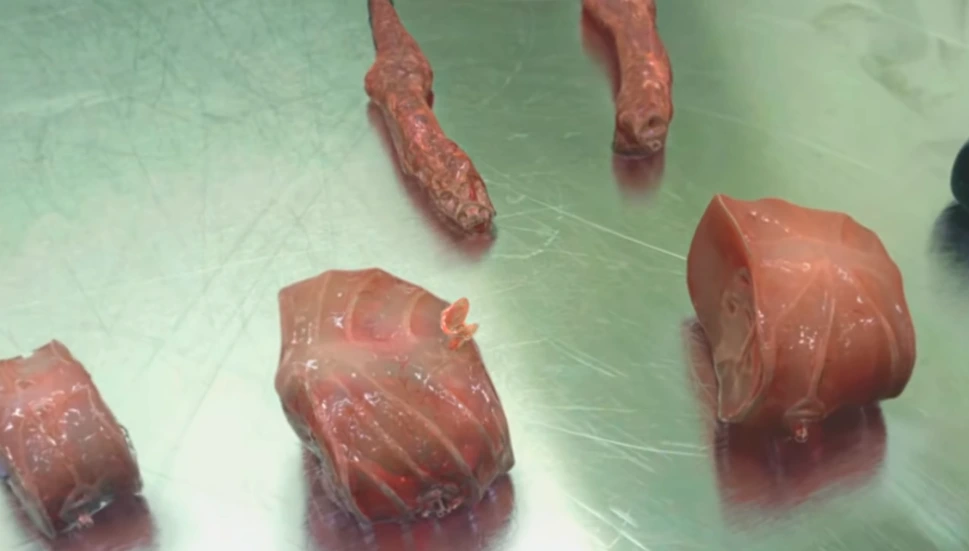
If you’ve used TikTok, Instagram Reels, or YouTube Shorts recently, you’ve probably seen #OscarRobot, a strange, fleshy creature crawling across a metal lab table. It twitches like a muscle, reacts to touch, and moves like a living lump of engineered tissue.
People were shocked. People were scared.
People were curious
The moment that clip appeared, hashtags like #OscarModularRobot and #CornelisVlasman exploded across the internet.
The captions made the internet freeze:
“Scientists built a living robot.”
“Is this a lab-grown organism?”
“New bio-hybrid modular robot discovered.”
#OscarRobot #BioRobot #ModularBody
Within weeks, this clip was everywhere. And more than 100 million people started asking the same question:
“Is this Oscar modular robot real?”
“Did a scientist named Cornelis create this living thing?”
“Is this some secret biotech experiment?”
Let’s break down the facts simply, clearly, and with all the details.
What Is the Oscar Modular Robot?
The Oscar Modular Robot, also called the Oscar bio robot, Oscar modular organism, and bio-hybrid modular robot, appears to be a living, breathing creature built from soft organic blocks.
In the viral footage:
- Oscar wiggles like muscle tissue
- The blocks look like small organs
- The body reacts as if it has nerves
- The structure looks modular, like biological LEGO
- The entire creature looks grown, not built
This creepy realism is why hashtags like #OscarRobot, #BioHybridRobot, and #LivingRobot exploded across social media.
But the truth behind Oscar is far from scientific.
The Truth: Oscar Is Completely Fake
Oscar is not a real robot.
He is not a biological organism.
And he is not a scientific breakthrough.
Oscar is a fictional creature created for a sci-fi digital art project called:
“The Modular Body”
The project was created by:
Floris Kaayk — a Dutch filmmaker and visual artist
Kaayk is known for blending science fiction with realistic documentary-style visuals. Oscar is one of his most convincing pieces.
The very first Oscar video was uploaded on:
📅 14 April 2016
on a YouTube channel named Cornelis Vlasman.
And that’s where the confusion began.
Who Is Cornelis Vlasman? (The Scientist in the Video)
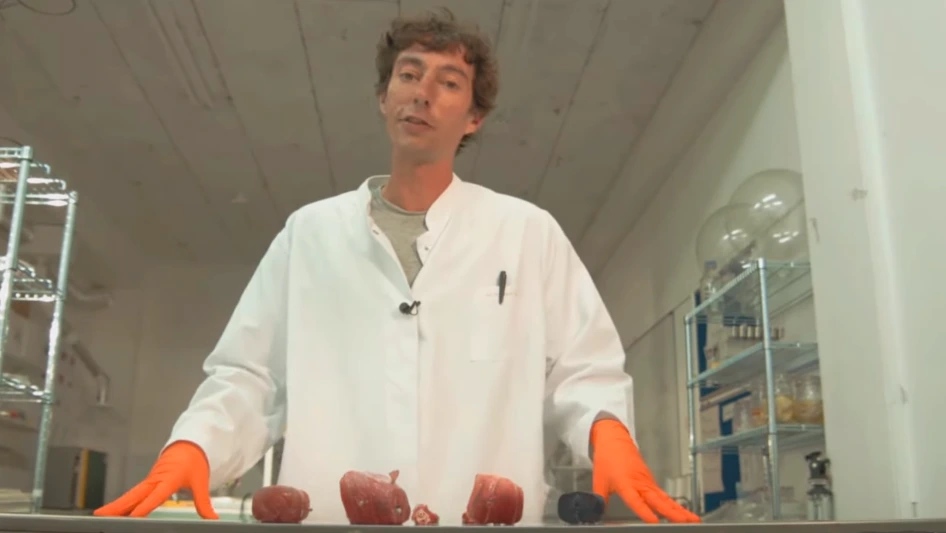
Cornelis Vlasman, the calm, confident scientist, seen handling Oscar, is:
- NOT a real scientist
- NOT a researcher
- NOT a public figure
He is a fictional character played by an actor.
In the fake documentary, Cornelis is presented as:
- A bioengineering expert
- A synthetic cells researcher
- The creator of “modular cell blocks.”
- The man who “built Oscar.”
His detailed explanations, lab gloves, and scientific tone made thousands believe he was real.
That’s why #CornelisVlasman became one of the top-searched hashtags during the viral wave.
How Oscar Fooled the Internet: Step-by-Step Breakdown
Oscar didn’t go viral by accident.
He fooled millions through a perfect mix of realism, confusion, and timing.
Here’s exactly how it happened:
1. The visuals looked 100% real
The soft textures, the lighting, the motion, everything looked like genuine lab footage.
The creature didn’t behave like CGI.
It moved like tissue reacting to stimuli.
2. The fake scientist made it believable
Cornelis looked and spoke like a real research scientist.
People trusted the video because he looked trustworthy.
3. TikTok removed the original context
Short clips were uploaded without captions or explanation.
Users thought they were seeing leaked footage from a private lab.
4. Viral hashtags added credibility
Hashtags like:
- #OscarRobot
- #BioRobot
- #ModularBody
- #BioHybridRobot
…made viewers assume Oscar was part of a real scientific project.
5. The timing matched real biotech breakthroughs
News headlines at the time spoke about:
- Xenobots
- Lab-grown organs
- 3D-printed tissue
- Self-healing bio-materials
So Oscar didn’t seem impossible.
He seemed like the next step.
6. The footage felt like leaked research
The raw filming style looked like someone secretly recorded their lab experiment.
This “forbidden video” feeling made Oscar spread faster.
7. Algorithms love weird, creepy content
TikTok and YouTube automatically push:
- Disturbing
- Strange
- Mysterious
- Science-fiction looking clips
Oscar was the perfect “algorithm candy.”
How They Made It Viral With Fake Shows & Videos
What really blew up Oscar in 2024–2025 wasn’t just reposts it was reconstructed fake content.
Creators used four tricks to turn Oscar into a global phenomenon:
1. Fake Documentary Episodes
People edited the original footage into short “episodes” that looked like parts of a real science documentary:
- Fake interviews
- Fake lab tests
- Fake “episode 1, 2, 3” clips
Viewers assumed there was a full show somewhere online.
2. AI-Enhanced Version of Oscar
AI tools were used to:
- Upscale the footage
- Modify colors
- Add more realistic shadows
- Generate new close-ups
This made Oscar look like newly recorded laboratory footage.
3. Fake Reaction Videos
Creators filmed their reactions:
- Looking scared
- Confused
- Shocked
- Disgusted
These reaction videos went viral faster than the original footage.
People tend to trust reactions more than raw clips.
4. Fake Explain-Videos With Serious Voiceovers
Many pages created “educational” explainers claiming Oscar was:
- A new bio-robot developed in Europe
- Lab-grown tissue that can self-heal
- The first modular living robot
Some even added AI-generated diagrams and charts.
The fake channel @cornelisvlasman5968 is a major reason people believed Oscar was real.
How Many People Did Oscar Fool?
Across platforms, Oscar’s total reach is enormous:
📌 TikTok: 100M+ views
📌 Instagram Reels: 40M+ views
📌 YouTube Shorts: 20M+ views
📌 Reddit (r/oddlyterrifying, r/futurology): 5–10M impressions
📌 Facebook & Twitter reposts: 15M+ views
⭐ Total estimated views: 170M–200M+
Could a Real Oscar Ever Exist?
Let’s answer this honestly.
✔ Parts of Oscar ARE possible today:
- Lab-grown muscle
- Soft biological robots
- Tiny living “xenobots.”
- Self-healing tissues
These technologies already exist.
✘ But a full-sized modular organism like Oscar is impossible:
We cannot create:
- Modular organs that snap together
- Independent cell blocks with brains
- Organic nervous systems from scratch
- Creatures that live without blood or oxygen
- Reconfigurable biological robotics
Real organisms require complex systems that we cannot yet recreate.
Final Scientific Verdict
Oscar looks like future biotech.
But he is still 100% fictional, a digital creation from 2016 reborn by social media in 2025.
Also Read: 30% Rule in AI | Don’t Rely 100% on AI Tools | Human Input Still Matters
Conclusion
Oscar is the internet’s most successful science illusion:
A fake creature that looks real, behaves real, and feels like something the future might create.
He fooled the world because he appeared at the perfect moment, the age of AI, biology breakthroughs, and viral mystery content.
But at the core, Oscar is simply a brilliantly crafted digital art project that social media turned into a global legend.
Fake or not, the Oscar modular robot proves one thing:
When technology feels believable, the internet will believe almost anything.
FAQs
1. Was Oscar ever shown in a real science documentary?
No. Oscar was never part of a real documentary. All “episodes” circulating online were fan-made edits or fictional clips from the original 2016 art project.
2. Did any university or research lab ever claim ownership of Oscar?
No research institute has ever linked itself to Oscar. No lab, university, or biotech company has acknowledged being involved. The project is purely artistic.
3. Is there a full-length movie or series about Oscar?
No official movie or series exists. However, many short fake “episodes” on TikTok or YouTube combine the original footage to make it look like a series.
4. Could Oscar be used as a concept for real medical robots?
Yes, as a concept only. Oscar’s modular design inspires discussions about future bio-robotics, but no technology today comes close to building such a creature.
5. Why did people think Oscar was new if it originated in 2016?
Because TikTok and Instagram Reels resurfaced the clips without dates or context, AI-enhanced edits also made the footage look modern and recently recorded.

Similar Posts
How Insurance Automation Is Transforming Supplier Lifecycle Management
Ready to Play Blooket? Discover Everything You Need in this Step-by-Step Guide
How to Prevent Information Theft Online and Offline