
Neuralink Blindsight: How Elon Musk’s Vision Implant Could Restore Sight
In the United States alone, over 12 million people live with severe visual impairment, and more than 1 million are legally blind, according to public health estimates. Globally, the number exceeds 43 million. Despite decades of medical progress, damage to the optic nerve or loss of eyesight remains irreversible with current treatments.
That is the problem Neuralink Blindsight claims to tackle.
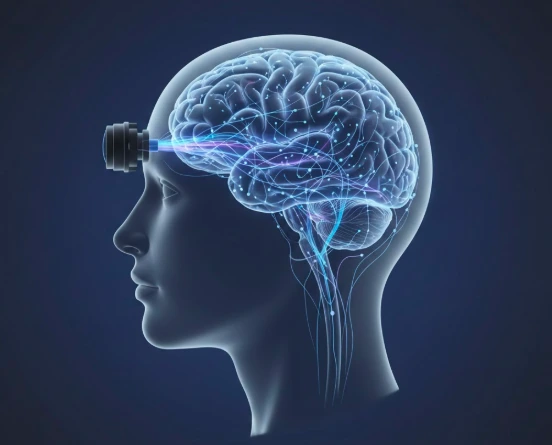
In late 2024 and 2025 public appearances, Elon Musk said Neuralink is developing a brain-computer interface for vision that bypasses the eyes entirely, sending visual information straight into the brain. He has stated the system has already worked in monkeys and could reach first human implantation by late 2025 or early 2026, though early vision would be “low resolution, like Atari graphics.”
If accurate, Blindsight would represent one of the most radical shifts in sensory restoration since cochlear implants transformed hearing loss. But separating what is scientifically grounded from what remains aspirational is essential.
What Is Neuralink Blindsight, Exactly?
Neuralink Blindsight is an experimental neural implant for blindness designed to stimulate the visual cortex, the part of the brain that interprets sight.
Unlike retinal implants or optic-nerve prosthetics, Blindsight does not depend on:
- Functional eyes
- A working optic nerve
Instead, it belongs to a category called blind brain-computer interface systems, in which digital visual data is delivered directly to cortical neurons.
This approach is not entirely new. Academic labs have studied cortical visual prostheses for more than 30 years, but Neuralink’s claim lies in scaling: thousands of electrodes, wireless operation, and AI-driven signal translation.
How Blindsight Works at a Technical Level (Beyond the Marketing)
Visual Input: Camera to Brain Pipeline
Blindsight begins with a camera system that captures visual scenes. This data is simplified, compressed, and translated into electrical patterns that the brain can process. This is often described as a Neuralink camera to the brain architecture.
Crucially, the brain does not receive images like a screen. Instead, it receives patterns of stimulation, similar to flashes of light called phosphenes, which the brain learns to interpret over time.
Visual Cortex Stimulation
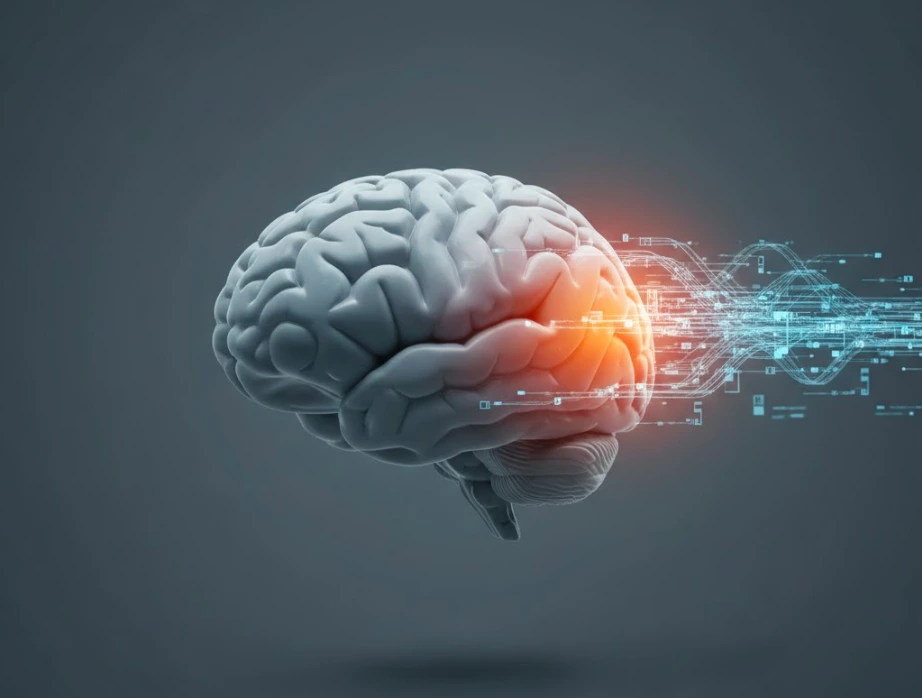
The implant uses an intracortical neural interface to stimulate neurons inside the visual cortex. This method is known as a visual cortex stimulation implant.
Historically, research from institutions cited by IEEE has shown that even dozens of stimulation points can produce basic spatial awareness. Neuralink claims to use electrode counts far higher than those of other devices, which could theoretically improve resolution.
Still, this remains orders of magnitude simpler than natural vision, which processes millions of signals simultaneously.
Can Neuralink Restore Vision Without Eyes or Optic Nerves?
This is the core claim driving interest.
From a neuroscience standpoint, neurabrlink vision without the optic nerve is plausible if the visual cortex remains healthy. The optic nerve is a data cable; Blindsight aims to replace it.
However, the distinction matters:
- This is not restoring biological sight
- It is creating artificial visual perception
When people ask can blind people see again Neuralink, the realistic answer is that Blindsight may allow detection of shapes, motion, or contrast, not faces or fine detail, at least initially.
What Testing Has Actually Been Done?
Animal Results
Neuralink has confirmed monkey testing vision, stating that animals responded to cortical stimulation in a way consistent with visual perception. Musk has publicly said the monkeys were not harmed and lived normal lives afterward.
What is missing:
- Peer-reviewed publications
- Independent replication
This absence does not invalidate the claims, but it places them in a pre-clinical, trust-based phase.
Human Testing Status
As of now, Neuralink has not tested Blindsight on humans. Human Neuralink trials have focused on motor and communication interfaces, not vision.
Blindsight-specific human trials are projected, not completed.
Neuralink Blindsight Human Trials: Why 2025–2026 Matters
Search interest around Neuralink blindsight human trials, Neuralink blindsight 2025, and Neuralink blindsight 2026 is driven by one key factor: regulatory movement.
Blindsight has received FDA Breakthrough Device designation, which accelerates review but does not guarantee approval. Early human implantation would likely involve:
- Fewer than 10 participants
- Strict medical criteria
- Non-commercial use
This phase is about safety and signal validation, not vision quality.
Why “Atari-Level Vision” Is Not an Understatement
When Musk says early vision will resemble 1980s Atari graphics, that is consistent with decades of research on Neuralink restoring vision technologies.
Even advanced cortical implants today produce:
- Dots of light
- Basic outlines
- Motion awareness
Calling Blindsight a Neuralink blindness cure would be inaccurate. A more precise description is assistive artificial vision, similar to how early cochlear implants provided sound awareness before speech clarity improved.
Superhuman Vision: Science or Speculation?
Musk has suggested future versions could enable superhuman vision for Neuralink, including infrared or ultraviolet perception.
From an engineering perspective, feeding non-visible data into the brain is theoretically possible. A human vision enhancement Neuralink could translate infrared data into cortical signals.
But today:
- No trials demonstrate this
- No medical approval pathway exists
- No neuroscience consensus supports near-term feasibility
Concepts like infrared vision neural implant or seeing ultraviolet neural implant belong firmly in long-term speculation.
The Real Barriers Experts Point To
Developing neural implants and artificial vision faces challenges far beyond hardware:
- Brain plasticity varies widely between individuals
- Long-term electrode stability is unproven
- Infection and immune response risks persist
- Ethical questions surround enhancement vs treatment
This is why even a functional brain chip for blindness would take years to scale safely.
Where Blindsight Fits in the Future of Brain-Computer Interfaces
Blindsight builds on the same neural interface foundation that Neuralink is using to explore whether people could eventually control technology directly with their brain, extending brain-computer interfaces beyond medical use.
If successful, Blindsight would validate direct sensory input to the brain, a milestone comparable to the first cochlear implants in the 1980s.
What Blind Patients Should Realistically Expect This Decade
For patients asking can Neuralink restore sight, expectations should be grounded:
- Partial visual cues are plausible
- Full natural vision is unlikely in the 2020s
- Early access will be limited and experimental
Still, even low-resolution vision could dramatically improve independence for people with total blindness.
Final Analysis
Neuralink Blindsight is neither science fiction nor a finished breakthrough. It sits in a narrow, critical space where credible neuroscience, aggressive engineering, and ambitious timelines intersect.
If Neuralink succeeds even partially, it would redefine what a brain-computer interface for vision can achieve. If it fails, it will still advance decades of research in neural prosthetics.
Either way, Blindsight is one of the most important neurotechnology experiments of this decade.
FAQs
1. Can Neuralink Blindsight help people who were blind from birth?
Neuralink Blindsight may help people who were blind from birth only if their visual cortex is structurally intact. However, experts caution that the brain may struggle to interpret visual signals if it has never processed sight before. Any vision restored would likely require long adaptation periods and remain limited in detail.
2. Is Neuralink Blindsight approved by the FDA?
No, Neuralink Blindsight is not FDA-approved. It has received FDA Breakthrough Device designation, which speeds up research and review but does not confirm safety, effectiveness, or public availability. Full approval would require successful human clinical trials.
3. How is Neuralink Blindsight different from retinal implants?
Retinal implants rely on working eyes and optic nerves, while Neuralink Blindsight bypasses both entirely. Blindsight sends visual data directly to the brain’s visual cortex, making it suitable for patients who cannot benefit from eye-based prosthetics.
4. Will Neuralink Blindsight allow blind people to see faces or read text?
No, not initially. Early versions of Neuralink Blindsight are expected to provide basic visual awareness, such as light, contrast, shapes, or movement. Recognizing faces or reading text would require far higher resolution than current brain-computer interfaces can deliver.
5. How long would it take for the brain to adapt to Blindsight vision?
Brain adaptation could take months or even years. The brain must learn to interpret artificial stimulation patterns as visual information. Adaptation speed varies by individual, age, and prior visual experience, making results unpredictable in early trials.
Similar Posts
ANZ Bank has become the latest Australian bank to discontinue ‘cheque books’ due to reduced usage
How Can I Improve My Internet Speed for Streaming?
Automation vs Human Work: Cost, Speed, Accuracy & What Data Says (2026)