
How Integration-First Thinking Reduces Long-Term IT Costs
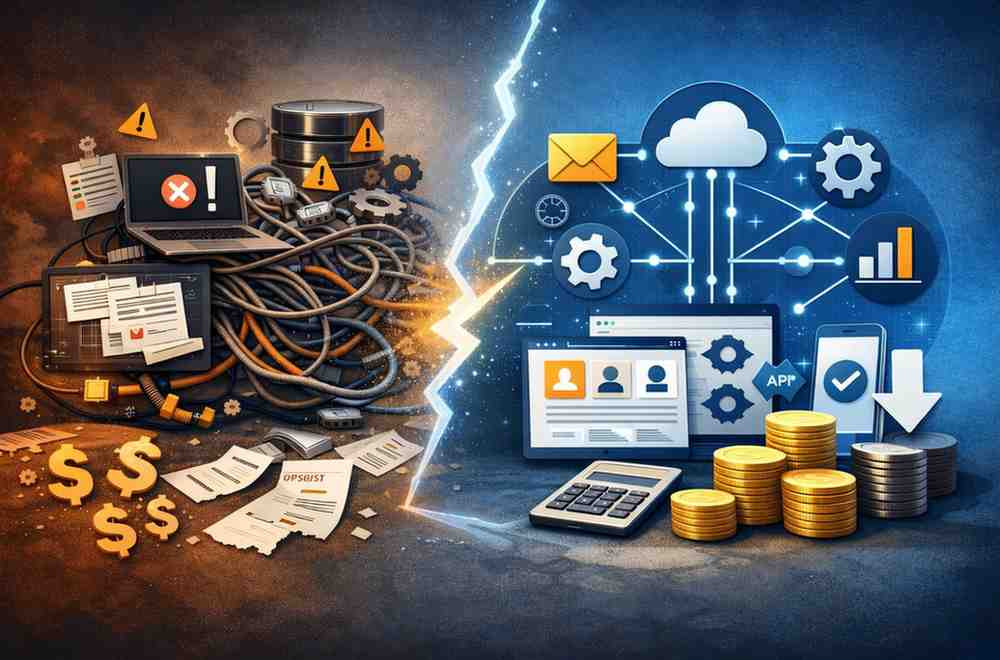
Let’s be honest. Most business IT setups don’t fail dramatically. They slowly bleed money. According to Gartner, organisations lose up to 30% of their IT budgets each year dealing with integration issues, manual workarounds, and system inefficiencies. It starts small. One extra app here. A workaround there. A spreadsheet that “just fills the gap”. Before you know it, your team is juggling tools that barely talk to each other, invoices are manually reconciled, reports don’t match, and someone is always “fixing the system”.
This is where integration-first thinking quietly saves you a fortune. Not upfront. Not in a flashy way. But over months and years, where IT costs usually hide.
If you run a retail or service-based business in Australia, this way of thinking can be the difference between systems that grow with you and systems that constantly need rebuilding. Let’s break it down, simply.
What Is Integration-First Thinking (Without the Buzzwords)?
Integration-first thinking means you design your systems to work together from day one, instead of bolting them together later.
Instead of asking:
“What tool do we need right now?”
You ask: “How will this tool connect to everything else we use now and in the future?”
It sounds subtle. But it changes everything. You are no longer buying software in isolation. You are building a connected ecosystem where data flows once, cleanly, and ends up where it needs to be. Think of it like plumbing.
You don’t install one tap today and worry about pipes later. You plan the whole system, so nothing leaks.
Why Most IT Costs Show Up Later (Not at the Start)
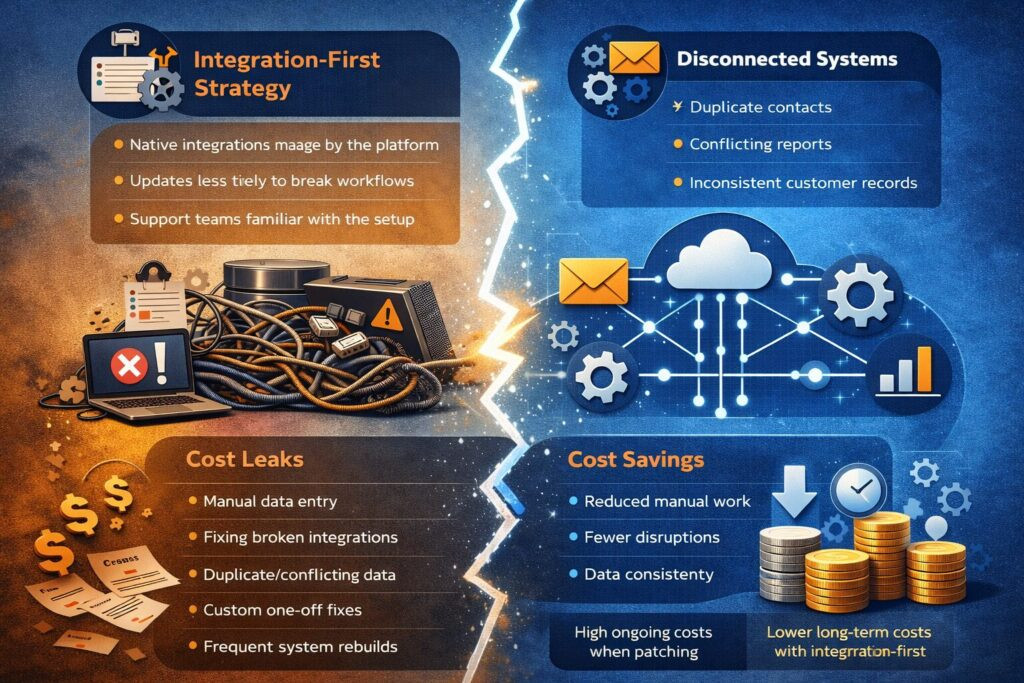
Here’s the uncomfortable truth. Most IT budgets underestimate the long-term cost of poor integration. The licence fees usually look fine. The hidden costs are what hurt. Common long-term IT cost leaks often start small and go unnoticed. Manual data entry between systems wastes time and increases error rates, while broken integrations after software updates quietly demand unplanned fixes.
Duplicate or conflicting data forces teams to double-check work, and custom one-off solutions that only one person understands become expensive bottlenecks. Eventually, systems must be rebuilt every few years as growth pushes them beyond their limits. None of this shows up on day one. It creeps in quietly, invoice by invoice, hour by hour, until costs feel unavoidable.
How Integration-First Thinking Reduces Long-Term IT Costs
1. You Stop Paying People to Do What Software Should Do
Every time someone copies data from one system into another, you are paying for inefficiency. And it’s not just time. It’s errors, rework, and frustration.
With integration-first thinking:
- Leads flow automatically into your CRM
- Quotes turn into invoices without re-entry
- Customer updates sync across systems
- Reports pulled from one clean data source
Your team is no longer acting as the glue between tools. That alone reduces ongoing operational costs more than most people expect.
2. You Avoid Expensive Rebuilds Every Few Years
Here’s a story we see all the time. A business grows fast.
The original system worked fine when there were two staff and a hundred customers.
At twenty staff and ten thousand customers, everything slows down. The usual response?
“We need a new system.”
But the real problem wasn’t the system. It was the lack of integration planning from the start. When you work with experienced Zoho CRM partners or Zoho One partners, the focus shifts from “getting live” to “staying scalable”.
3. You Reduce Dependency on Custom Code
Custom code feels powerful. Until the developer disappears or the platform updates. Integration-first setups prioritise native integrations and supported connectors over fragile custom builds.
This matters because native integrations are maintained directly by the platform itself, which means updates are tested and supported rather than patched together later. When the platform evolves, these integrations are far less likely to break workflows, reducing unexpected downtime and emergency fixes. Support teams can step in and help because the setup follows documented standards rather than custom one-off logic. You are also not locked into a single developer who understands fragile custom code. With less custom code to maintain, long-term maintenance costs drop significantly. Simple as that.
4. You Get Cleaner Data (Which Saves Real Money)
Bad data costs money, and wrong decisions cost even more. When systems are disconnected, data begins to fracture across platforms rather than flow cleanly between them. This leads to duplicate contacts, conflicting reports, and inconsistent customer records that no one fully trusts. Teams end up spending time reconciling numbers instead of acting on them, and meetings turn into endless debates about which figure is actually correct rather than how to move the business forward.
Integration-first thinking creates one source of truth. When sales, finance, support, and marketing all pull from the same data, decisions become faster and more confident. And confidence saves money. Because hesitation, rework, and guesswork are expensive.
Why Zoho-Based Ecosystems Fit Integration-First Thinking
Zoho is built differently from many point solutions. Instead of dozens of unrelated products stitched together through acquisitions, Zoho tools are designed to work together naturally.
That’s why businesses working with Zoho One partners often see lower long-term IT costs. Everything from CRM, finance, marketing, support, analytics, and automation sits within one ecosystem.
- Less friction.
- Fewer moving parts.
- Lower cost of change.
FAQs About Integration-First Thinking:
Is integration-first thinking only for large businesses?
Not at all.
In fact, smaller businesses benefit the most because early decisions compound over time. Planning integrations early prevents expensive corrections later.
Does integration-first mean higher upfront costs?
Sometimes slightly.
But it almost always means lower total cost of ownership over time. It’s like buying good shoes. You pay once instead of replacing cheap ones annually.
Can existing systems be redesigned with an integration-first mindset?
Yes. And it happens more often than you think. Many businesses keep their core systems and restructure how they connect, automate, and share data. That’s where experienced Zoho CRM partners add real value.
What’s the biggest mistake businesses make with integrations?
Treating integrations as an afterthought. By the time problems arise, fixes are usually more complex and expensive.
A Quick Real-World Scenario
Picture this.
A growing Australian service business uses:
- One system for leads
- Another for quoting
- A separate finance tool
- Spreadsheets to “tie it all together.”
Every month:
- Reports don’t line up
- Invoices need manual fixes
- Staff complain about admin work
Final Thoughts: Think Systems, Not Software
If there’s one takeaway, it’s this.
Software choices matter. But systems thinking matters more. Integration-first thinking isn’t about buying more tools.
It’s about choosing tools that work together, scale smoothly, and don’t punish you later. When done right, it quietly reduces long-term IT costs while making your team’s life easier. And honestly, that’s the kind of technology everyone deserves.
Ready to Rethink Your Setup?
If you are planning growth, replacing systems, or feeling the pain of disconnected tools, now is the perfect time to step back and look at the bigger picture. The earlier you think integration-first, the less you pay for it later.
Similar Posts
Can Docparser’s OCR Magic Transform Your PDF Workflow?
Why Your Website Isn’t Showing Up on Google—And How to Fix It
The Best Wifi Mesh for 2024