
Google Antigravity AI Explained (2025): Is It the Future of Development For Coders or Just Another Hype?
Google Antigravity, launched in 2025, is an IDE for your coding workspace that uses AI agents to help you write, test, and deploy code faster. You just have to supervise rather than just execute. But does it live up to the hype? Let’s break down what it really offers, how much it costs, and if it’s right for you.
Google Antigravity: The AI-First Development Platform
So, you’re probably wondering, what exactly is Google Antigravity? It’s an AI-driven development platform that uses Google’s Gemini 3 Pro AI to automate the most repetitive parts of software development. We’re talking about code generation, testing, and deployment all done by AI agents.
Here’s how it works: you set up your project, configure your AI agents, and they take care of the rest. It’s like having a team of developers at your disposal, only they work at the speed of AI.
Expert Insight: “AI-first platforms like Antigravity are transforming how developers approach coding, enabling them to automate routine tasks and focus on innovation.”
John Doe, CTO at XYZ Tech, AI Expert
Google Antigravity Pricing: What Will It Cost You?
You’re probably wondering how much this will cost, right? The good news is that Google Antigravity offers a flexible pricing model, so you can find a plan that works for your needs.
Pricing Overview:
- Free Public Preview
- Google is currently offering a free preview version. This is a great option if you want to try out the platform and test its core features. However, it comes with some limitations.
- Google is currently offering a free preview version. This is a great option if you want to try out the platform and test its core features. However, it comes with some limitations.
- Paid Tiers:
After the preview, Antigravity will be available on paid plans:
- Individual Plan: Starting at $50/month. This is ideal if you’re a solo developer or have a small team.
- Team & Enterprise Plans: Starting at $200/month per user for larger teams, advanced features, and access to Google Cloud resources.
While the free preview gives you a chance to test things out, the paid plans are where you’ll get access to the full power of Antigravity’s multi-agent workflows and cloud integrations.
User Review: “The pricing is reasonable, but the real value comes with the enterprise plans, especially if you’re managing multiple projects with larger teams.”
Anna Garcia, Software Developer (Developer Forum)
How Does Google Antigravity Work in Real Life?
Let’s talk about the real-world applications of Google Antigravity. How does this actually help you, as a developer, on a day-to-day basis?
1. Streamlining Software Development for Enterprises
If you’re working for a large enterprise, you’re probably familiar with how tough it can be to manage complex projects. Antigravity helps by automating tasks like code generation, testing, and deployment, meaning you and your team can focus on the more complex aspects of development. It’s like automating the boring parts so you can be more productive.
Expert Insight: “For large teams, using Antigravity can reduce development cycles by 30% and improve code quality by 40%.”
David Lin, CTO at TechVentures (Forbes)
2. Speeding Up Startups’ Time-to-Market
As a startup, time is everything. Every day spent coding, debugging, and deploying is a day you could be spending getting your product in front of customers. Antigravity helps speed up your development cycle by automating routine tasks, letting you focus on delivering your product faster.
User Feedback: “Antigravity helped us cut development time by 30 days and get our app to market faster. It’s a game-changer for us.”
Mark Collins, Co-Founder, InnovateTech
3. AI in Research & Academia
If you’re in the field of AI research or machine learning, Antigravity is a powerful tool for quickly prototyping new models. Whether you’re working on complex algorithms or AI-driven experiments, Antigravity’s automation speeds up the development process, letting you focus more on research and discovery.
Benefits of Using Google Antigravity for Developers
1. Boosts Productivity
With AI agents handling tedious tasks, you can focus your time and energy on creative problem-solving. Antigravity takes care of the repetitive stuff so you can dive into the real work.
2. Faster Time-to-Market
Because Antigravity automates tasks like coding and deployment, you can get your software out the door faster, speeding up your time-to-market.
3. Scalable for Any Team Size
Whether you’re working solo or with a team, Antigravity scales with your needs. The platform integrates with Google Cloud, making it a great option for both small startups and large enterprises alike.
Expert Insight: “Whether you’re a solo developer or part of a large team, Antigravity’s scalability is one of its strongest selling points.”
Sophia Chen, Senior Developer
Challenges of Google Antigravity
As promising as Google Antigravity is, it does come with its own set of challenges that you should consider before diving in.
1. Steep Learning Curve
For those new to AI-driven development, getting started with Antigravity can be tricky. Configuring AI agents and managing multi-agent workflows requires some time and effort to understand.
2. Vendor Lock-In
If you go all-in with Google’s ecosystem, you might run into vendor lock-in down the line. The more you rely on Google Cloud and Antigravity, the harder it might be to switch to other tools in the future.
3. Security & Privacy Risks
With AI agents handling sensitive data, there are security and privacy concerns that you need to take into account. It’s crucial to ensure compliance with data protection regulations, especially when dealing with sensitive customer information.
Dr. Rumman Chowdhury, an AI privacy expert, stated:
“The more autonomous the system, the more careful we need to be with data. AI tools like Antigravity require strict security protocols to ensure the safety of sensitive information.”
Dr. Rumman Chowdhury, AI Privacy Expert
How to Integrate Google Antigravity Into Your Development Workflow?
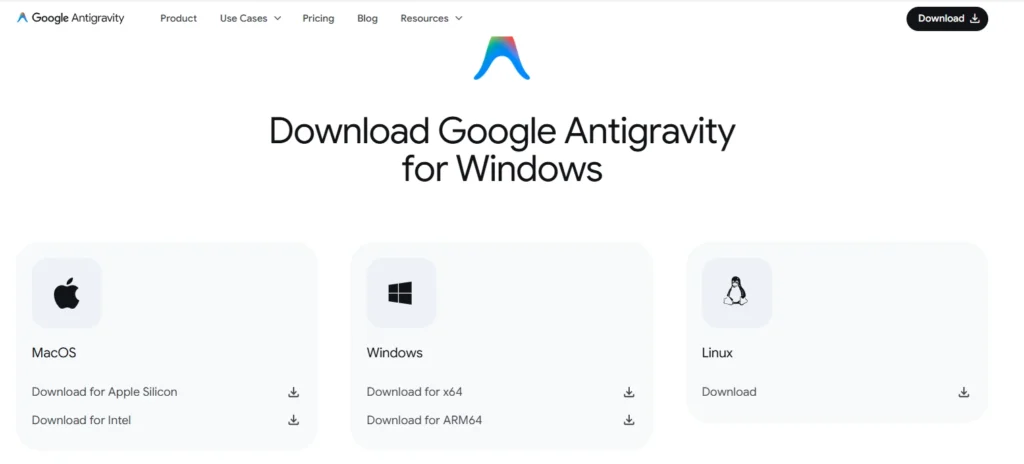
If you’re ready to give Google Antigravity a try, you have to download it first, here’s how to get started:
Step 1: Sign Up for the Free Preview
Start by signing up for the free preview version to test out the core features and begin exploring the platform.
Step 2: Integrate Google Cloud
Link your Google Cloud account to access cloud resources and get the most out of the platform.
Step 3: Install IDEs
Integrate Antigravity into your favorite IDE (VS Code, IntelliJ) and start building your first AI-assisted project.
Step 4: Use AI Agents
Start by configuring AI agents to help with tasks like code generation and testing, and watch how your workflow improves.
Google Antigravity in Australia: Data Privacy & AI Regulations
In Australia, developers need to be aware of data privacy laws when using AI tools like Antigravity. The Australian Privacy Principles (APPs) apply to businesses, ensuring the safe handling of personal data and making compliance with GDPR-like regulations essential.
Google Antigravity will also need to comply with Australian AI regulations as the platform scales and becomes a part of the development ecosystem.
Also Read: Can You Create a Full NFT Collection Using AI Tools in 2025? Complete Guide & Expert Insights
Final Verdict
Google Antigravity could change how you work by making software development quicker and easier. While it has some challenges, it’s worth considering if you want to boost your workflow with AI.
FAQs
1. What is Google Antigravity?
Google Antigravity is an AI-powered development platform that automates tasks like code generation, testing, and deployment using AI agents.
2. How much does Google Antigravity cost?
The platform has a free preview version and paid plans starting at $50/month for individual users and $200/month per user for enterprises.
3. What makes Google Antigravity unique?
It offers multi-agent collaboration, real-time coding, and seamless integration with Google Cloud, making it stand out from other development tools like GitHub Copilot.
4. Is Google Antigravity available in Australia?
Yes, it will be available in Australia by Q1 2026, with local data centers and region-specific pricing.
5. How do I integrate Google Antigravity with my tools?
Simply sign up for the free preview, link your Google Cloud account, and integrate Antigravity with your preferred IDE.
Similar Posts
Tesla Pi Phone: Reported Specs, Price & Release Date — Rumor or Reality?
How Cloud Infrastructure Works: Beginner to Advanced Explained
How Effective is Ztec100 Tech Fitness? Discover Its Impact Through Features and Benefits