

Free AI API Keys in 2026: Real Options, Limits & Warnings

If you’re here, chances are you’re looking for “free AI API keys” and have ended up more confused than when you started. Some pages promise unlimited access, others dump long lists without context, and a few quietly push unsafe shortcuts.
So let’s slow this down and talk clearly.
Yes, you can access AI APIs for free in 2026.
No, they are not unlimited.
And yes, if you choose the right platforms, you can build, test, and learn without paying upfront.
In this guide, we’ll walk through what “free” really means today, where legitimate free access exists, how these APIs behave in real use, and how you should decide which one actually fits your goal.
First, What Do We Mean by “Free” in 2026?
When we say free AI API, we’re not talking about secret keys or loopholes. In 2026, free access usually means one of these:
- A free tier with daily or monthly limits
- Trial credits for new accounts
- Open-source models with capped inference
- Shared infrastructure, where performance is lower but cost is zero
What it does not mean is unlimited usage, production-grade reliability, or zero restrictions forever. AI is expensive to run, and every serious provider puts boundaries around free access.
Once you accept that, everything else becomes much easier to evaluate.
Top 3 Platforms Where You Can Legitimately Get Free AI API Keys Access
Google AI Studio (Gemini API)
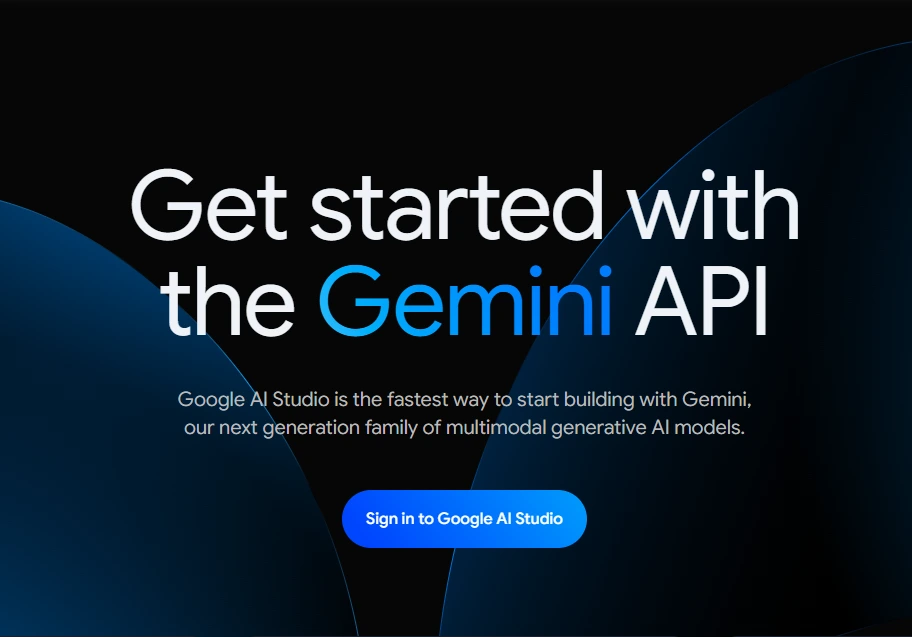
If you’re just getting started, this is often the smoothest entry point.
Google’s AI Studio gives you access to Gemini models through an official API, and the free tier is still active in 2026. You don’t need a credit card to begin, and the setup is straightforward.
Most people use it for writing, summarizing, SEO drafts, research notes, and lightweight automation. The responses are consistent, and the interface is beginner-friendly.
You will hit daily limits eventually, but for blogs, testing ideas, or learning how APIs work, it’s usually more than enough.
OpenRouter (One API, Many Models)
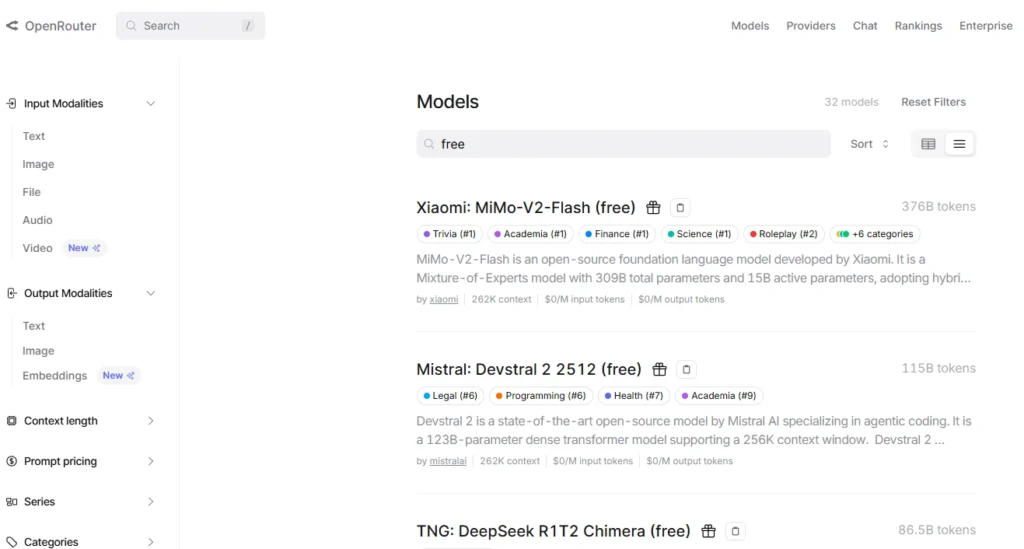
OpenRouter is useful when you want flexibility rather than committing to one model.
Instead of locking you into a single provider, it lets you access multiple AI models with one API key. Some models are free, others are paid, and you decide which one to use per request.
This setup is especially helpful if you’re experimenting, comparing outputs, or building something that may evolve later. You’re not forced to pay upfront, and you’re not boxed into one ecosystem.
Think of OpenRouter as a testing ground rather than a forever-free solution.
Hugging Face Inference API
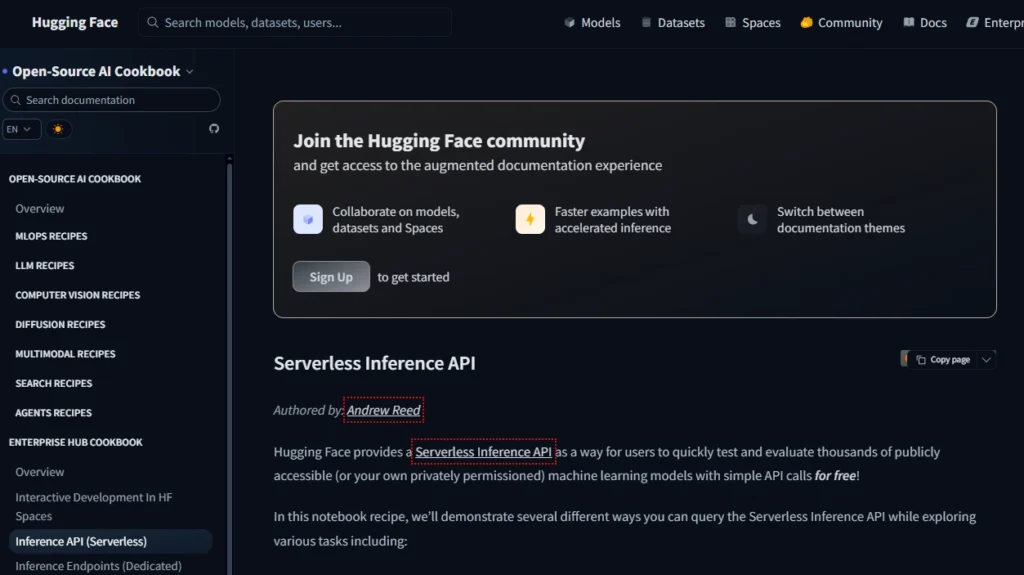
Hugging Face is where you go when you want openness and transparency.
Many open-source models can still be accessed for free through their inference API. The trade-off is performance. Since free users share resources, responses can be slower, and availability may vary.
That said, it’s excellent for learning, research, and understanding how different models behave. If your goal is exploration rather than polish, this platform makes sense.
How Free AI APIs Actually Behave in Real Life
This is something most articles skip, but it matters.
When you use a free API, you’re usually on shared infrastructure. That means:
- You might get slower responses during peak hours
- Requests can be rate-limited
- Large prompts or long outputs may be restricted
Nothing is broken. This is simply how providers balance costs.
If you’re testing ideas, drafting content, or learning, this is fine. If you’re serving real users at scale, free tiers will feel tight very quickly.
Let’s Match the API to What You’re Trying to Do
Instead of asking “Which one is best?”, it helps to ask “Best for what?”
If you’re writing blog content or doing SEO work, you’ll care more about language quality than speed.
If you’re experimenting with AI features, you’ll want flexibility and multiple models.
If you’re learning or researching, open models matter more than polish.
Once you frame it this way, the choice usually becomes obvious.
A Quick but Honest Warning About “Free API Keys” Online
You’ll probably see GitHub repos or forums offering ready-made API keys. It’s tempting, especially when you’re just testing something.
But here’s the reality:
Those keys are often leaked, shared, or already flagged.
Using them can lead to sudden shutdowns, broken projects, or worse, security issues. Even for small experiments, it’s not worth the instability.
Generating your own key from an official dashboard takes minutes and avoids all of that risk.
The Limitations You Should Expect (So You’re Not Surprised)
Free AI APIs usually come with:
- Usage caps
- Token or context limits
- Lower priority processing
- No guaranteed uptime
This isn’t a downside; it’s the boundary between learning and scaling. Most successful projects start free, prove value, and only then move to paid tiers.
When Does It Make Sense to Move Beyond Free?
You’ll feel it naturally.
When limits start interrupting your workflow, when reliability matters more than cost, or when real users depend on your app, that’s usually the moment to upgrade.
Free tiers are there to help you reach that decision with confidence, not to replace paid infrastructure forever.
Also Read: How AI Systems Make Decisions in 2026: Step-by-Step, Detailed Guide
The Real Takeaway
Free AI API access in 2026 is very real, but it works best when you treat it as a starting point, not a shortcut. If you choose official platforms, understand the limits, and match the tool to your goal, you can build, learn, and experiment without spending anything upfront.
That’s exactly what free tiers are meant for.
FAQs
Can I legally use free AI APIs?
Yes, as long as you generate your own keys and follow the platform terms.
Can I use them for commercial work?
Often yes, but limits still apply. Always check usage policies.
Do free API keys expire?
Some trial keys do. Free tiers usually stay active with limits.
Is there any unlimited free AI API in 2026?
No. Claims like that are misleading.

Similar Posts
Best Songs to Rip a PR 2K Erg
How Oscar, the Fake Creepy Lab Robot, Has Fooled More Than 100 Million People on the Internet?
AI Coding Assistants Developers Actually Need in 2025: A Practical, Honest Breakdown