
The Connected Cockpit: How Carbon Fiber Steering Wheels Are Merging Mechanics with Digital Intelligence
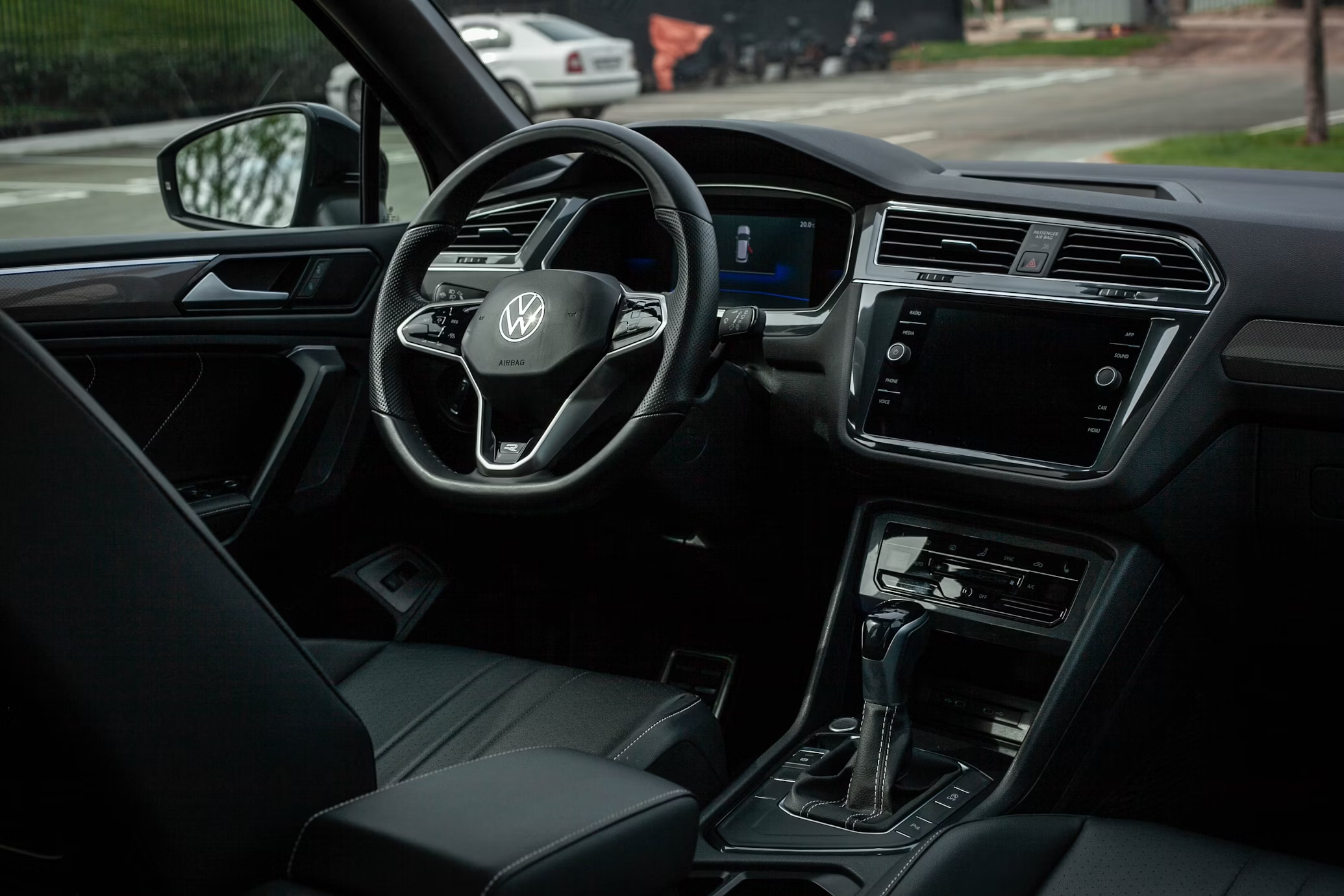
In modern automotive innovation, the most significant transformation isn’t happening under the hood; it’s inside the cockpit. The steering wheel, once a purely mechanical link between driver and machine, is evolving into an intelligent interface that bridges physical control and digital awareness. Among these advancements, carbon fiber steering wheels stand at the forefront, blending precision engineering with embedded technology to redefine what it means to drive.
From Performance to Perception: A Smarter Wheel
For decades, carbon fiber has been a symbol of speed, strength, and performance in motorsport. But its adoption today isn’t just about aesthetics or weight reduction; it’s about integrating intelligence. Modern steering systems are being reimagined as data-driven control hubs, equipped with sensors, capacitive touchpads, and AI-powered feedback systems.
This transformation is enabling vehicles to interpret driver intent in real time. For example, bright steering wheels now integrate grip sensors and haptic actuators that communicate with driver-assistance systems (ADAS). A subtle vibration warns of lane drift, while dynamic resistance adjusts based on speed or driving mode. The result: a connected, responsive experience that keeps the driver informed without distraction.
Why Carbon Fiber Is the Perfect Foundation
The unique properties of carbon fiber, ultra-lightweight yet incredibly strong, make it the perfect foundation for next-generation steering technologies. Reducing steering weight enhances agility and feedback, while maintaining structural rigidity ensures accurate data transmission between sensors and onboard systems.
According to a study on the vibrational analysis of carbon fiber steering wheels (IJARIIT, PDF), carbon fiber composites exhibit higher natural frequencies and lower damping than traditional materials, thereby improving both sensitivity and responsiveness in performance and data-collection scenarios.
This precise material behavior allows engineers to embed IoT sensors, microcontrollers, and biometric readers without compromising structure or driver feel a crucial step toward more intelligent cockpits.
Integrating AI and Human Touch
Artificial intelligence is quietly reshaping the way drivers interact with their vehicles. Steering wheels now serve as haptic communicators, providing tactile cues based on AI analysis of driving conditions.
Research on adaptive haptic shared-control paradigms (arXiv, PDF) demonstrates how AI can modulate steering feedback based on trust levels and driver engagement. In practical terms, this means your car could subtly adjust steering resistance when it predicts distraction, or share partial control during semi-autonomous driving.
Carbon fiber’s stiffness and stability make it ideal for transmitting these subtle haptic signals, creating a seamless dialogue between human intuition and algorithmic precision.
The Digital Layer: Data, Feedback, and Connectivity
In connected vehicles, the steering wheel is evolving into a data node within the car’s ecosystem. Through 5G and vehicle-to-everything (V2X) communication, it relays driver behavior and feedback data to onboard AI systems. This real-time loop improves safety, personalizes responsiveness, and contributes to predictive maintenance analytics.
Some automakers are experimenting with OLED-embedded carbon fiber steering wheels that display navigation prompts, energy consumption, and even biometric alerts directly on the wheel. Combined with over-the-air (OTA) updates, these systems can refine driving dynamics long after the vehicle leaves the factory.
Safety and Biometric Integration
Safety is also being redefined through technology. Carbon fiber provides superior durability, allowing integration of airbags and sensor modules without structural fatigue. More advanced prototypes now include biometric sensors that track heart rate and skin temperature, feeding AI models to detect fatigue or stress.
This combination of material science and digital intelligence transforms the steering wheel into an active safety component one that can prevent accidents before they happen by detecting irregular behavior and assisting the driver accordingly.
Customization Meets Intelligence
The modern driver expects personalization. With AI-assisted ergonomics, steering systems can now remember driver profiles and automatically adjust feedback strength, temperature, and sensitivity. Carbon fiber’s flexible design supports modular layouts, allowing automakers to tailor wheels for different market segments, from EVs to sports coupes.
This adaptability also supports sustainability. Because carbon fiber components are longer-lasting and require fewer replacements, they align with the industry’s shift toward greener, lightweight mobility solutions.
Conclusion: Driving into the Age of Intelligence
The humble steering wheel has evolved into a digital interface, one that feels, learns, and responds. Carbon fiber steering wheels exemplify this transformation, merging mechanical precision with data intelligence to create safer, smarter, and more connected driving experiences.
In the near future, these innovations won’t be reserved for supercars or concept models. They’ll become standard across the automotive industry, representing a fusion of engineering and artificial intelligence that defines the next generation of mobility.
As cars continue to learn, adapt, and communicate, the wheel in your hands will no longer steer it will think with you.
Similar Posts
Is the Logitech MX BRIO the Solution for High-Quality Video Communication?
OCR in Healthcare: Automating Patient Records, Medical Billing, and Compliance Workflows
ScheduleOnce Review – Your Ultimate Scheduling App