
Building a Scalable Tech Stack for Growing Startups

Growth is good. But growth without structure is chaos.
In fact, 70% of digital transformation projects fail due to poor system selection and integration issues, often leading to massive financial losses and operational setbacks. Growth without the right systems in place does not create momentum. It creates confusion.
If you run a retail or service-based business in Australia, your tech stack quietly determines how far and how fast you can scale. The right systems support sales, operations, reporting, and customer experience. The wrong ones create bottlenecks, manual work, and frustration.
Building a scalable tech stack for growing startups is not about using more tools. It is about using the right tools, connected properly, with long-term growth in mind.
What Is a Scalable Tech Stack?
A tech stack is the collection of digital tools you use to run your business. This usually includes:
- A CRM to manage leads and customers
- Cloud accounting software
- Cloud automation
- Operations or project management tools
- Inventory or booking systems
Scalable means these tools can handle increased customers, transactions, and staff without major disruption.
If doubling your sales would break your systems, they are not scalable.
Start With Core Business Functions
Before choosing new platforms, assess how your business operates.
Every retail or service business has three core stages:
- Lead generation and sales
- Service delivery or product fulfilment
- Customer retention and repeat business
Your technology must support each stage smoothly.
For example, if your sales team cannot see customer history, upselling becomes harder. If your accounting software does not sync with sales data, cash flow reporting becomes unreliable. If marketing is disconnected from your CRM, follow-ups are inconsistent.
- Scalability starts with alignment.
- Choose Systems That Integrate Well
- Integration is often more important than features.
When systems connect properly:
- Customer data flows automatically
- Invoices are generated without manual entry
- Marketing campaigns trigger based on real behaviour
- Reports are accurate and timely
Poor integration creates duplicated work and errors.
This is where some businesses decide to hire a Zoho developer to build custom workflows between platforms. Others work with experienced Zoho partners, such as Smartmates, which has won Best Partner of the Year, to review the architecture and ensure proper configuration from the start.
Key Criteria for Selecting Scalable Tools
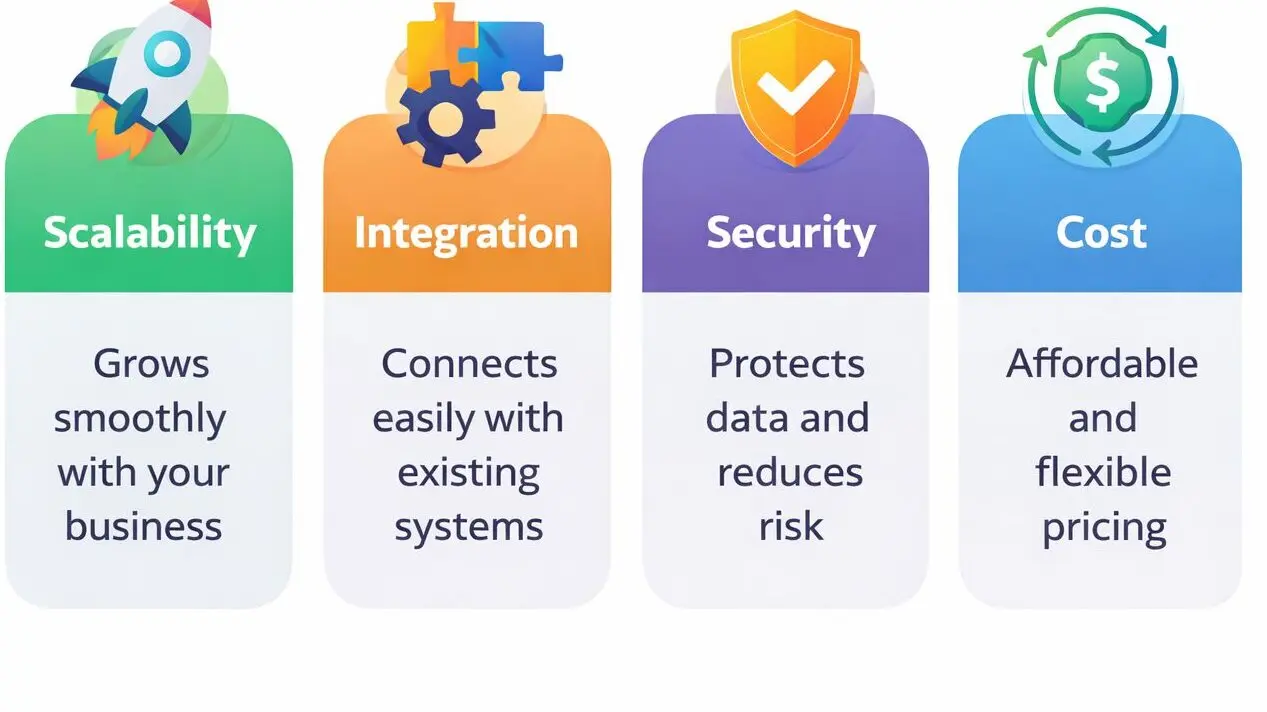
When evaluating software, focus on long-term suitability rather than short-term cost.
Consider:
- Can the platform support increased users and higher transaction volume?
- Does it offer API access or native integrations?
- Is it compliant with Australian regulations, including privacy and tax requirements?
- Does it provide reliable local or regional support?
Many Australian businesses prefer cloud-based systems because they allow remote access, automatic updates, and easier collaboration across locations.
Avoid Overcomplication
One of the most common mistakes growing businesses make is adding tools without a clear strategy. More software does not automatically improve performance. In many cases, it creates:
- Confusion over where data lives
- Overlapping functionality
- Increased subscription costs
- Lower staff adoption
A focused tech stack with clearly defined roles for each tool performs better than a fragmented system with excessive apps.
Keep your foundation strong before layering additional tools.
The Role of Automation in Scalability
Automation supports growth by reducing manual effort. Practical examples include:
- Automatic lead assignment in your CRM
- Invoice generation after service completion
- Appointment reminders via SMS or email
- Post purchase follow up campaigns
Automation improves consistency and reduces reliance on memory or manual processes. For service-based businesses, especially, this directly improves customer experience.
However, automation tools must be built on clean data. Poor setup leads to incorrect triggers and confusion. Configuration quality matters.
Reporting and Data Visibility
As your business grows, decision-making becomes more complex. You need reliable data to guide pricing, staffing, marketing spend, and expansion.
A scalable tech stack should provide:
- Real-time sales data
- Customer lifetime value insights
- Cash flow visibility
- Performance by product, service, or location
If generating reports requires manual spreadsheet consolidation, your systems are limiting your growth.
Accurate reporting allows you to respond quickly to market shifts, seasonal demand, and operational issues.
Frequently Asked Questions
How do I know my tech stack is holding me back?
If growth increases stress, admin work, and data errors, your systems are not keeping up.
Should startups invest in custom development early?
In most cases, no. Most startups benefit from established cloud platforms before considering custom development.
How often should systems be reviewed?
At least once a year. Audit integrations, costs, security, and performance.
Building a scalable tech stack for growing startups is about clarity, connection, and long-term thinking. Choose tools that integrate well. Keep processes clean. Review regularly.
If your sales doubled tomorrow, would your systems cope? If not, now is the time to strengthen your foundation.
Similar Posts
Cold Eeze Cooling Ace Review (2026): What You Should Know Before Buying
Jobs at Risk from AI in 2026: Real Data Behind Slowing Hiring and Changing Work
The Evolution of Dental Technology: Transforming Smiles and Patient Care