
How Bluetooth Audio Works: Inside Modern Wireless Speakers and Headphones

Wireless audio has become a central part of how people listen to music, watch content, participate in meetings, and enjoy entertainment on the go. In fact, around 60 million adults in the U.S. (about 24% of the population) own at least one smart speaker device, with the average smart speaker household featuring 2.6 devices, highlighting the growing adoption of wireless audio technology. Bluetooth technology enables streaming audio between devices without cables, offering convenience while maintaining respectable sound quality. From compact portable speakers to advanced over-ear headphones and noise-cancelling earbuds, Bluetooth has become the standard for effortless wireless listening.
Understanding how Bluetooth audio works provides insight into why some devices deliver more transparent sound, better battery efficiency, and more stable connectivity than others. This article explores the engineering behind Bluetooth audio, the components that shape sound quality, and the features that define today’s Bluetooth speaker and headphones.
The Basics of Bluetooth Audio Transmission

Bluetooth audio works by sending data from a source device (such as a smartphone or laptop) to a receiver (a speaker or headphones). This transmission happens over short-range radio waves in the 2.4 GHz spectrum. The process is designed to be energy-efficient, making it ideal for portable devices with limited battery capacity.
Bluetooth compresses audio data to reduce bandwidth consumption and maintain steady transmission. Once the data reaches the receiving device, it is decoded and converted into audible sound through internal drivers.
How Bluetooth Audio Processing Works
Although Bluetooth audio appears simple on the surface, the underlying process involves several stages of signal handling. This sequence determines how quickly and accurately audio is reproduced.
Bluetooth Audio Signal Path (Numbered Overview)
- Audio is encoded on the source device using a Bluetooth codec.
- Compressed data is transmitted via Bluetooth radio waves.
- The receiving device decodes the signal using the same codec.
- Digital signal processing (DSP) adjusts frequency balance, bass levels, and vocal clarity.
- Drivers convert electrical signals into sound, creating the final audio output.
This chain happens in milliseconds, enabling lag-free listening suitable for music playback, calls, and streaming.
Bluetooth Versions and Why They Matter
Modern wireless devices typically use Bluetooth 5.0, 5.2, or 5.3. These versions bring improvements such as stronger signal stability, longer range, faster pairing, and enhanced power efficiency. They also reduce dropouts, a common issue in older Bluetooth generations.
Better Bluetooth versions allow wireless speakers, noise-cancelling earbuds, and over-ear headphones to maintain consistent sound even in busy environments like offices or public spaces.
Bluetooth Codecs: The Key to Sound Quality
A codec determines how audio data is compressed and transmitted over Bluetooth. Different codecs influence clarity, latency, and overall listening experience.
Below is a simplified comparison of standard Bluetooth codecs:
Bluetooth Codec Comparison Table
| Codec | Audio Quality | Latency | Notes |
| SBC | Standard | Moderate | Mandatory on all devices; basic performance |
| AAC | Good | Moderate | Common on smartphones; improves clarity |
| aptX | Very good | Low | Better frequency response; requires compatibility |
| LDAC | High | Low–Medium | Supports higher bitrates for detailed sound |
The choice of codec affects how music, voices, and instruments are reproduced. High-end over-ear headphones and earbuds often support multiple codecs to balance performance and battery use.
Drivers: The Component That Creates Sound
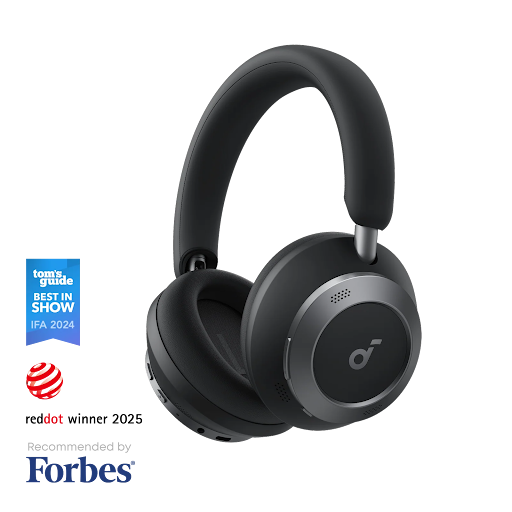
Inside every speaker or headphone is a driver a small transducer that produces audible sound. Driver design impacts loudness, bass depth, clarity, and overall listening experience.
Dynamic drivers are most common in portable speakers and Bluetooth headphones because they deliver strong bass and efficient sound in compact enclosures. Balanced armature drivers, often used inside compact noise-cancelling earbuds, offer detail and precision in higher frequencies.
Battery Life and Power Efficiency
Bluetooth devices rely on smart power-management chips to conserve energy. Efficiency determines how long a speaker or headphone can operate on a single charge.
Modern devices use low-energy Bluetooth protocols and optimized circuitry to maintain playback while minimizing battery drain. Larger devices like over-ear headphones can accommodate larger batteries, offering much longer listening times than smaller earbuds.
Noise Cancellation and Bluetooth Audio
Although Bluetooth does not provide noise cancellation on its own, many modern devices combine wireless audio with active noise cancellation (ANC). This technology uses microphones to detect external noise and internal processors to generate counter-waves that reduce unwanted sound.
This is especially common in premium noise-cancelling earbuds and full-size headphones, where ANC significantly enhances listening clarity in loud environments.
Wireless Speakers vs. Wireless Headphones
Wireless speakers are designed to fill rooms or outdoor spaces with sound, while headphones deliver a personal, immersive audio experience. Speakers use larger drivers and wider enclosures, enabling them to project sound farther. Headphones, especially over-ear models, use closed or semi-open ear cups to create controlled acoustic chambers that enhance detail and bass response.
The best choice depends on whether users prefer shared listening or private audio immersion.
Why Bluetooth Audio Continues to Improve
Bluetooth audio is advancing quickly due to better chipsets, improved codecs, and more innovative DSP algorithms. Manufacturers are integrating advanced tuning, enhanced microphones, and balanced sound profiles that improve clarity across frequencies.
As technology evolves, users can expect stronger connections, wider ranges, and increasingly natural-sounding wireless audio, whether through portable speakers, compact earbuds, or studio-style headphones.
Conclusion
Bluetooth audio has transformed modern listening by offering convenience without sacrificing sound quality. With improved codecs, efficient chipsets, advanced drivers, and optional features like noise cancellation, wireless speakers and headphones now deliver reliable, immersive sound for everyday use.
Understanding how the technology works helps listeners choose the right devices, whether they prefer the portability of noise-cancelling earbuds, the immersive depth of over-ear headphones, or the room-filling sound of wireless speakers. With continuous improvements in Bluetooth standards and audio engineering, wireless listening will continue to become clearer, faster, and more adaptable to daily life.
Similar Posts
How to Clear Cache on MacBook Air in a Simple Way
OCR in Healthcare: Automating Patient Records, Medical Billing, and Compliance Workflows
The Connected Cockpit: How Carbon Fiber Steering Wheels Are Merging Mechanics with Digital Intelligence