
How AR Virtual Classrooms Are Fixing Student Engagement Problems
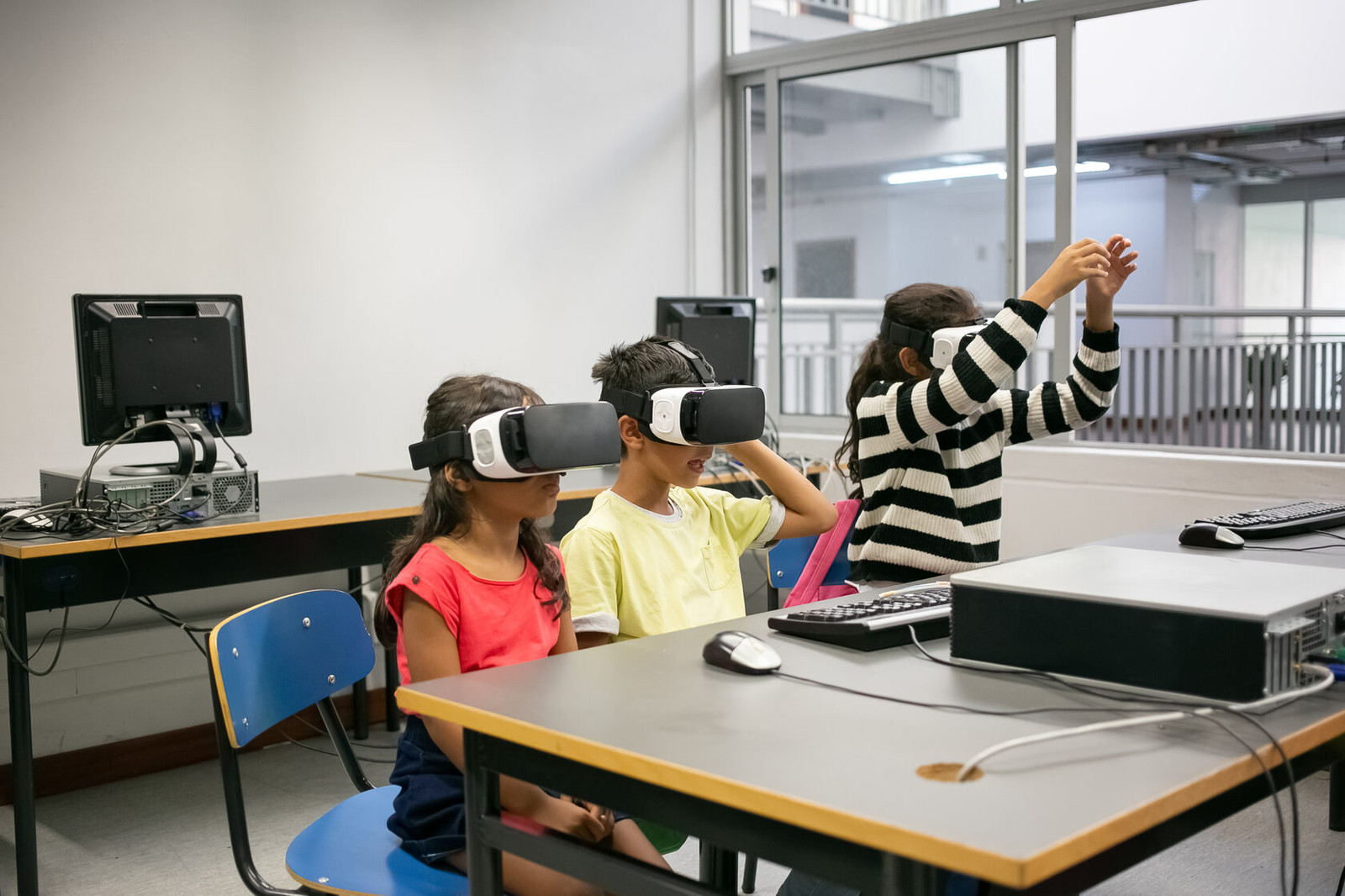
Student engagement remains one of the biggest challenges in online learning. Traditional virtual classrooms often fail to maintain attention, leading to reduced learning outcomes. However, the rise of AR virtual classrooms is transforming the way students interact with educational content. By integrating augmented reality, educators can create immersive experiences that boost attention, participation, and understanding. In this article, we explore how AR is revolutionizing virtual learning and why it is becoming an essential tool for modern education.
What Are AR Virtual Classrooms?
AR virtual classrooms combine augmented reality (AR) technology with online learning platforms. These classrooms overlay digital elements — such as 3D models, interactive diagrams, and virtual experiments — onto a student’s real-world environment.
Key Features
- 3D interactive lessons
- Real-time quizzes and polls
- Virtual labs and simulations
- Collaborative group activities
- Gamified learning modules
Because AR creates a sense of presence, students feel more connected and engaged compared to standard video-based virtual lessons.
Why Student Engagement Is a Problem in Virtual Classrooms
Despite the flexibility of online learning, student engagement often suffers due to:
- Passive content delivery (lectures only)
- Lack of hands-on experience
- Distractions from devices
- Limited peer interaction
- Difficulty visualizing complex concepts
Consequently, learners retain less information, struggle with motivation, and sometimes drop out.
Integrating AR virtual classrooms addresses these issues directly by making learning active and interactive.
How AR Virtual Classrooms Improve Engagement
AR creates experiences that blend the physical and digital worlds, leading to higher focus and participation.
Interactive 3D Lessons
- Students can manipulate 3D models of organs, molecules, or historical artifacts.
- Complex concepts become easier to visualize.
- Interaction increases attention and memory retention.
For example, biology students can explore a 3D human heart model from multiple angles, enhancing understanding compared to flat images in textbooks.
Real-Time Feedback and Quizzes
AR platforms allow instant feedback through interactive polls or quizzes embedded in lessons.
- Keeps students accountable
- Encourages active participation
- Highlights learning gaps immediately
Teachers can track responses and adjust instruction, creating a personalized learning environment.
Virtual Labs and Simulations
AR virtual labs allow students to conduct experiments safely and cost-effectively.
- Chemistry students can mix virtual chemicals without hazards
- Physics learners can test forces and motion interactively
- Engineering students can assemble machines virtually
This hands-on approach replaces passive watching with experiential learning, enhancing engagement.
Gamified Learning Modules
AR can turn lessons into interactive games:
- Points and achievements motivate students
- Collaborative challenges foster peer interaction
- Story-based learning creates immersion
Gamification makes learning enjoyable while increasing retention and focus.
Collaborative Group Activities
Students in AR virtual classrooms can work together on projects in real-time:
- Annotating 3D models together
- Participating in virtual scavenger hunts
- Solving problem-based challenges
This interaction replicates in-person teamwork and strengthens social learning.
Comparison: Traditional vs AR Virtual Classrooms
| Feature | Traditional Virtual Classroom | AR Virtual Classroom |
| Student Interaction | Low | High |
| Engagement | Moderate | High |
| Concept Visualization | Text/images | 3D interactive models |
| Hands-on Learning | Limited | Extensive virtual labs |
| Retention | Lower | Higher |
Clearly, AR enhances both engagement and learning outcomes.
Examples of AR Virtual Classroom Tools
Several platforms are already making a real difference in education:
- zSpace – Offers virtual labs and 3D science experiments
- Merge EDU – Lets students manipulate digital objects in AR
- Nearpod VR & AR – Integrates immersive lessons with quizzes
- Google AR & VR Education – Provides accessible AR experiences for schools
These tools are gaining traction globally, as reported by Stanford’s AI in Education research.
Benefits of AR Virtual Classrooms
- Improved Focus and Attention – Interactive content reduces distractions
- Hands-On Learning – Virtual labs simulate real-life experiments
- Higher Knowledge Retention – Immersive experiences enhance memory
- Accessibility – Students can access AR lessons from anywhere
- Collaboration – Encourages teamwork and peer learning
- Cost-Effective Experiments – AR eliminates need for expensive lab equipment
According to UNESCO research on AI & AR in education, immersive classrooms boost engagement by over 30% compared to standard online lessons.
Challenges of AR Virtual Classrooms
While promising, AR integration comes with challenges:
- High hardware costs (AR glasses or devices)
- Need for reliable internet
- Teacher training for AR lesson design
- Accessibility issues for students with disabilities
However, with proper planning and support, schools can overcome these barriers and enjoy long-term benefits.
Future of AR in Virtual Education
The trend is clear: AR is no longer a novelty. Experts predict:
- Increased integration with AI for personalized learning
- Hybrid classrooms combining in-person and AR experiences
- More gamified and collaborative modules
- Wider accessibility through smartphones and tablets
Educational institutions adopting AR virtual classrooms now will be at the forefront of digital learning innovation.
Conclusion
AR virtual classrooms are revolutionizing online education by addressing the engagement gap. By providing interactive 3D lessons, virtual labs, gamification, and collaborative tools, AR ensures that students remain focused, motivated, and retain knowledge more effectively. Despite challenges like hardware costs and training, the benefits far outweigh the drawbacks. Schools and educators should explore AR virtual classrooms today to enhance learning outcomes and prepare students for the future.
FAQs About AR Virtual Classrooms
What is an AR virtual classroom?
An AR virtual classroom integrates augmented reality technology with online learning, creating interactive, immersive lessons.
How do AR virtual classrooms improve engagement?
They allow students to interact with 3D models, participate in virtual labs, and collaborate in real-time, making learning active and immersive.
Are AR virtual classrooms expensive?
While some AR hardware can be costly, many platforms support mobile devices and tablets, making them accessible to most schools.
Can AR replace traditional teaching?
Not entirely. AR complements teaching by enhancing engagement and understanding but does not replace teachers.
Which subjects benefit most from AR virtual classrooms?
STEM subjects, history, and arts benefit greatly, as AR helps visualize complex concepts and conduct virtual experiments.
Are AR virtual classrooms suitable for all ages?
Yes. Many AR platforms offer content tailored for K-12, higher education, and adult learners.
About the Author
TechNew Editorial Team
TechNew provides expert insights into emerging educational technology, AR innovations, and digital learning trends. Our writers combine research-backed data with hands-on expertise to guide educators and students worldwide.
Similar Posts
Hyperscale Datacenters: Architecture, Benefits, and Future Trends
Evie Charging Station Details: Australia’s Fast EV Network With Real Locations
Why Choose the HP Spectre x360 15 for Your Productivity Needs?