
MIT Engineers Use AI to Create 5× Stronger 3D-Printable Aluminum
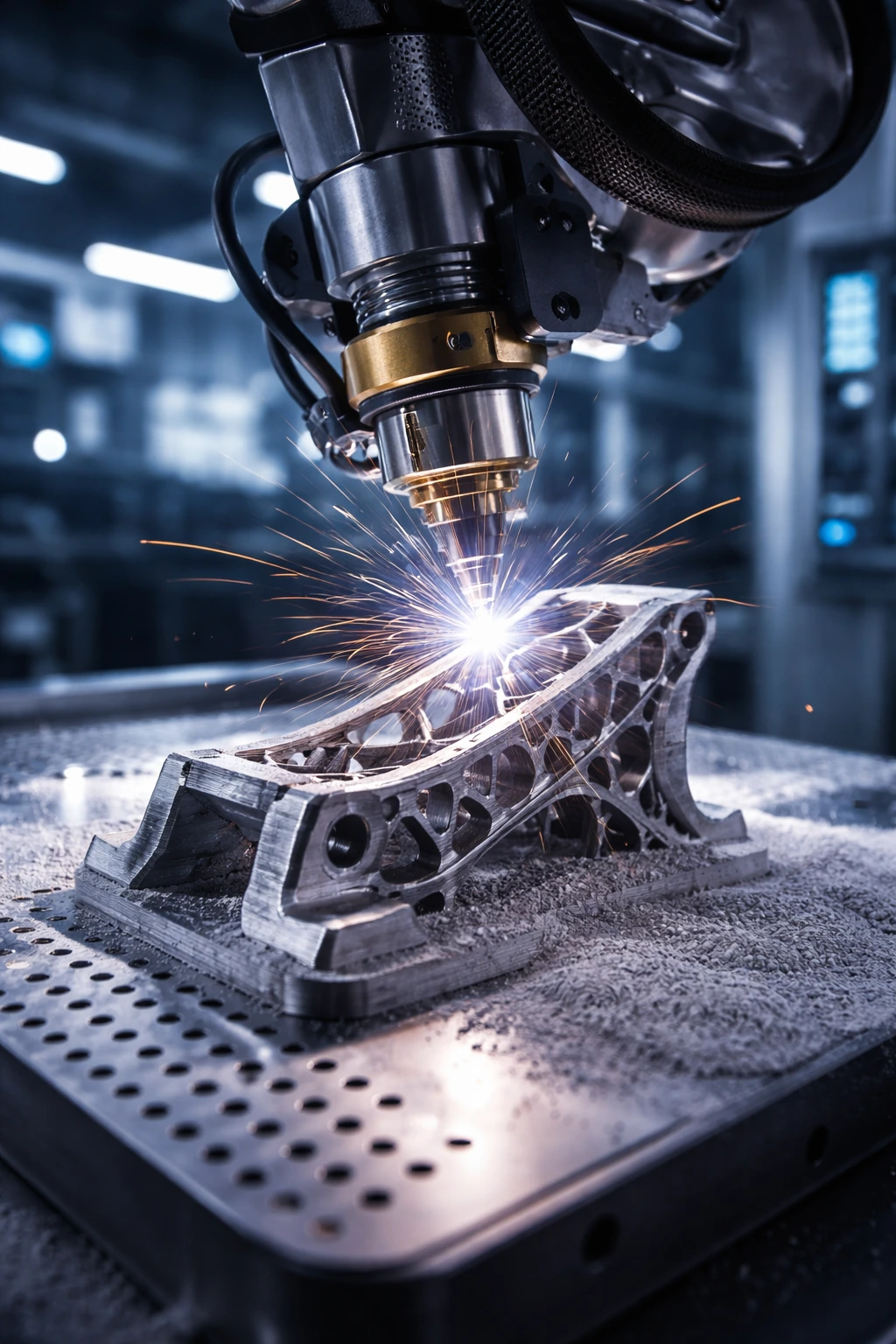
For more than 100 years, aluminum alloys have been developed through slow, incremental metallurgy.
Now, artificial intelligence has entered the equation.
Researchers at Massachusetts Institute of Technology used machine learning to design a new 3D-printable high-strength aluminum alloy that overcomes one of the most persistent challenges in additive manufacturing: hot cracking during rapid solidification.
If you work in aerospace engineering, electric vehicle manufacturing, or advanced materials research, this development deserves attention.
It is not just a better alloy.
It is a new way to invent metals.
The Core Engineering Problem: Aluminum vs Additive Manufacturing
Aluminum is the second most consumed metal globally, with over 70 million metric tons produced annually. It dominates:
• Aerospace structural frames
• Automotive lightweighting
• Electric vehicle chassis
• Satellite components
• Consumer electronics
Yet aluminum has been underrepresented in metal additive manufacturing (AM), especially in high-load structural applications.
The issue lies in physics.
During laser powder bed fusion (LPBF):
• Local temperatures exceed 600–700°C
• Cooling rates can reach 10⁵–10⁶ K/s
• Thermal gradients generate internal stress
• Microcracks form at grain boundaries
High-strength aluminum alloys such as 7075 and 2024 are especially prone to hot tearing due to their solidification characteristics.
As a result, the industry has relied heavily on AlSi10Mg, which is easier to print but mechanically inferior.
That compromise has limited aluminum’s structural potential in 3D printing.
What MIT’s Machine Learning Model Actually Solved
Instead of testing alloys experimentally one by one, MIT engineers applied AI-driven computational alloy design.
The machine learning framework evaluated:
• Crack susceptibility metrics
• Solidification temperature ranges
• Grain structure evolution
• Alloying element interactions
Tens of thousands of compositional permutations were screened digitally.
In traditional metallurgical research, exploring that design space would take years and significant lab resources.
Here, AI narrowed the candidate list to compositions that:
- Minimize hot cracking
- Maintain high tensile strength
- Remain printable under LPBF conditions
This approach aligns with the emerging field of Integrated Computational Materials Engineering (ICME).
Mechanical Performance: Why Strength Claims Matter
Standard printable aluminum alloy (AlSi10Mg) typically exhibits:
• Tensile strength ~300 MPa
• Yield strength ~200–250 MPa
High-strength aerospace alloy 7075-T6 can exceed:
• Tensile strength ~500–570 MPa
The AI-designed alloy reportedly achieves tensile performance significantly exceeding standard printable alloys, narrowing the gap between printable aluminum and aerospace-grade material.
The “up to 5× stronger” claim refers to specific configurations relative to weaker printable grades, not against all aerospace aluminum.
From an engineering perspective, the key insight is this:
The strength-printability trade-off is no longer fixed.
Additive Manufacturing Market Impact
The global additive manufacturing market is projected to exceed $45 billion within this decade, with metal AM representing a rapidly growing share.
Aerospace alone accounts for billions annually in structural metals.
If high-strength aluminum becomes reliably printable, it unlocks:
• Load-bearing 3D printed aircraft brackets
• Integrated lattice-optimized aerospace parts
• EV structural nodes
• Reduced fasteners and assembly steps
For manufacturers, this means fewer components, less machining, and lower waste.
That directly affects production economics.
Expert Insight: Why This Is a Structural Shift
Materials science has traditionally been slow because nature’s design space is enormous.
There are millions of possible alloy compositions.
Humans can test only a tiny fraction.
AI changes that ratio.
Instead of guessing compositions, machine learning narrows the probability space intelligently.
This is not just faster R&D.
It is probabilistic metallurgy.
For aerospace OEMs and EV manufacturers, that matters because:
• Development cycles shrink
• Risk decreases
• Material optimization becomes targeted
This fundamentally changes the speed of industrial innovation.
Economic Perspective: Why Lightweighting Is a Billion-Dollar Game
Aircraft fuel efficiency improves with weight reduction.
Even a 1% structural weight decrease can translate into measurable fuel savings over an aircraft’s operational lifetime.
In EV manufacturing:
• Every kilogram reduced improves range
• Structural efficiency improves crash safety
• Manufacturing simplification lowers cost
The global electric vehicle market is projected to exceed hundreds of billions annually.
Materials optimization is no longer optional; it is strategic.
AI-designed aluminum introduces a new variable in that equation.
Remaining Barriers: Certification and Scale
Despite the breakthrough, industrial adoption requires:
• Aerospace certification (FAA / EASA equivalents)
• Long-term fatigue testing
• Corrosion resistance validation
• Cost-effective alloying element supply
Material qualification can take years.
However, once validated, the advantage compounds.
AI in Materials Science: The Bigger Pattern
This development fits into a larger trend:
Artificial intelligence is accelerating discovery in:
• Battery cathodes
• Hydrogen fuel materials
• Carbon capture substrates
• High-temperature superalloys
• Semiconductor materials
Materials development cycles historically span 5–15 years.
AI reduces early-stage uncertainty.
The implication is simple:
Physical innovation may begin to move at software speed.
What This Means for You
If you are:
• An aerospace engineer
• A materials scientist
• An EV manufacturer
• An additive manufacturing specialist
You are witnessing the early stage of algorithm-driven metallurgy.
The aluminum itself is important.
The method is revolutionary.
Also Read: ASML Machine Explained: The $200M Technology Powering the World’s Advanced Chips
Final Assessment
MIT’s AI-designed aluminum alloy is not merely stronger.
It demonstrates that artificial intelligence can navigate complex chemical design spaces and produce printable, high-strength structural metals.
This expands the future of:
• 3D-printable aluminum
• Additive manufacturing materials
• AI in materials science
• Lightweight aerospace engineering
• EV structural design
The breakthrough is not just mechanical.
It is methodological.
And methodology changes industries.
FAQs
1. What did MIT’s AI-designed aluminum actually improve?
MIT’s machine learning-designed aluminum alloy significantly improves crack resistance during laser powder bed fusion 3D printing. It also delivers much higher tensile strength compared to common printable alloys like AlSi10Mg, helping close the gap between additive manufacturing aluminum and aerospace-grade materials.
2. Is the new aluminum stronger than traditional aerospace alloys?
No. The alloy is not stronger than high-performance aerospace aluminum like 7075-T6. However, it is dramatically stronger than conventional 3D-printable aluminum grades, which historically sacrificed strength to avoid cracking during additive manufacturing.
3. Why is aluminum difficult to 3D print?
High-strength aluminum alloys tend to crack during rapid heating and cooling in laser powder bed fusion. The extreme thermal gradients create internal stress and hot tearing. This has limited 3D-printable aluminum to lower-strength compositions until now.
4. How does AI help design stronger metals?
Artificial intelligence accelerates materials discovery by modeling thousands of alloy compositions digitally. Machine learning predicts crack formation, microstructure evolution, and strength outcomes before physical testing. This reduces development time from years to potentially months.
5. What industries could benefit from AI-designed aluminum?
Aerospace, electric vehicles, defense manufacturing, and advanced additive manufacturing are the primary beneficiaries. Lightweight, high-strength printable aluminum could reduce aircraft weight, improve EV range, and simplify structural part production.
Similar Posts
Who Is Scott Farquhar? The Leader Driving Atlassian’s AI-First Product Strategy in 2026
Portable Speaker: Understanding the Technology Behind Soundcore’s Modern Audio Design
Lumen5 Text to Video Generator: How to Use It Free in 2026 (Expert Review + Step-by-Step Guide)